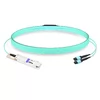
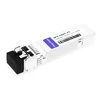
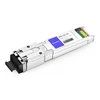
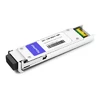
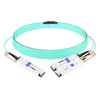
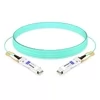
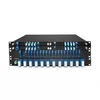
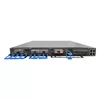
A fiber converter is the simplest fix for the most common network mismatch: copper on one end and fiber on the other. It takes an electrical Ethernet signal on the RJ45 side, converts it to an optical signal, and transmits it over fiber—extending your link far beyond the standard 100-meter copper limit without requiring any changes to the connected equipment.
What Is a Fiber Converter?
A fiber converter—also known as a fiber media converter or an Ethernet media converter—is a compact, plug-and-play device that bridges two different physical media at Layer 1. In practice, most fiber converters handle two primary jobs:
· Copper-to-fiber conversion: Converts an electrical RJ45 Ethernet signal to an optical signal (or vice versa), allowing a copper-based switch, router, or endpoint to connect over fiber. This is the most common use case.
· Fiber-to-fiber conversion: Converts between fiber modes and formats, such as multimode to single-mode or dual-fiber to single-fiber (BiDi), allowing two incompatible fiber segments to connect.
·Note: A fiber converter is not a fiber optic modem. An optical modem converts Ethernet into an entirely different protocol (historically E1/T1), while a fiber converter transparently bridges two media types at the physical layer.
Standalone Fiber Converters: Fixed-Port and SFP-Slot Models
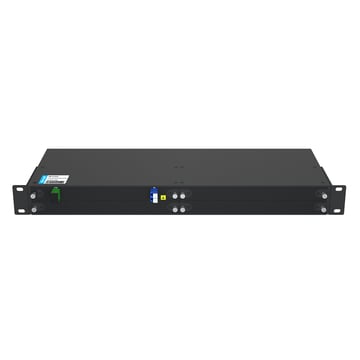
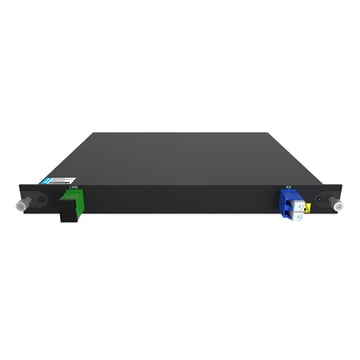
FiberMall fiber converters are available as standalone desktop or mini units, configured in three main types:
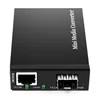
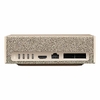
· Mini/Standalone Converters: Equipped with a 1× 10/100/1000Base-T RJ45 copper port and a 1× 1000Base-X SFP fiber port. Operating at 1G speeds, they support both multimode and single-mode fiber (depending on the installed SFP) for typical reaches ranging from 550 m to 120 km.
· Fixed-Port Converters: Feature a 1× 10/100/1000Base-T RJ45 copper port and a 1× fixed SC, LC, or ST fiber port. Operating at 1G speeds, they utilize 850 nm for multimode or 1310/1550 nm for single-mode, covering typical reaches of 550 m to 120 km.
· Industrial Converters: Built with a 1× 10/100/1000Base-T RJ45 copper port and either an SFP or fixed fiber port at 1G speeds. Supporting multimode or single-mode fiber for reaches between 550 m and 120 km, these units are specifically ruggedized for harsh environments.
Fixed-port converters have the transceiver built-in, locking them to one specific fiber type, wavelength, and connector. Choose them for a single, permanent link with known specifications.
SFP-slot converters are distance-agnostic. The installed SFP module determines the reach, wavelength, and fiber type. A single chassis can serve short or long links simply by swapping transceivers, reducing spare inventory and future-proofing your investment. Because FiberMall manufactures both the converter and the SFP modules, every SFP-slot unit can ship pre-matched with the correct transceiver.
Single-Mode vs. Multimode: Which Fiber Do You Need?
The fiber type dictates both distance and cost, making it the first variable to determine before ordering.
· Multimode fiber (850 nm) is the cost-effective choice for shorter, in-building runs—typically up to 550 meters on OM3/OM4 cable. Use it for intra-building and short campus links.
· Single-mode fiber (1310 nm or 1550 nm) is required for longer distances, ranging from 10 km up to 120 km or more. Use it for building-to-building, campus backbone, and metro links.
The rule of thumb: For distances under 550 meters, multimode is generally sufficient; for anything beyond 550 meters, single-mode is required. (Note: Corrected from the original 2 km claim, as standard Gigabit multimode maxes out at 550m).
Speed Options: 10/100/1000 Mbps and Gigabit
FiberMall fiber converters support 10/100 Mbps, Gigabit (10/100/1000 Mbps), and 2.5G speeds to match the connected equipment. Most copper-to-fiber links run at Gigabit speeds; a 10/100/1000 auto-negotiating converter covers the vast majority of enterprise and campus deployments.
PoE and Industrial Fiber Converters
· PoE/PoE+: Fiber optic cables carry no electrical power. If your remote device (such as an IP camera, wireless access point, or VoIP phone) requires power, choose a converter with a PoE/PoE+ copper port.
· Industrial: For outdoor or harsh installations, industrial converters feature a wide operating temperature range (typically -40°C to +75°C), DIN-rail mounting, and ESD protection to maintain stable links where commercial units would fail.
Frequently Asked Questions
What is a fiber converter used for?
A fiber converter bridges two different physical media—most commonly copper Ethernet (RJ45) to fiber optic, or multimode fiber to single-mode fiber. It extends a link beyond the standard 100-meter copper limit, allowing copper-based equipment to connect over fiber without replacing either device.
What is the difference between a fiber converter and a media converter?
They are the exact same device. "Media converter" is the broad umbrella term for any device that converts one signal type into another, while "fiber converter" is the specific shorthand used for fiber-to-copper (and occasionally fiber-to-fiber) conversion.
Is a fiber converter the same as a fiber optic modem?
No. An optical modem converts Ethernet into a different protocol entirely (historically E1/T1), while a fiber converter transparently bridges two media types at Layer 1.
What is the difference between single-mode and multimode fiber?
Multimode fiber has a larger core and uses an 850 nm wavelength for shorter distances, typically up to 550 meters. Single-mode fiber has a narrower core and uses 1310 nm or 1550 nm wavelengths for extended distances, ranging from 10 km to 120 km or more.
Should I choose an SFP-slot or a fixed-port fiber converter?
Choose a fixed-port converter for a permanent link with known, unchanging specifications. Choose an SFP-slot converter for flexibility—you can adjust the distance, fiber type, or wavelength simply by swapping the SFP module rather than replacing the entire unit.
How far can a fiber converter transmit?
Reach depends on the fiber type and transceiver module. Multimode typically spans 220 m to 550 m, while single-mode reaches 10 km to 120 km or more. An SFP-slot converter allows you to extend the reach of the same chassis by installing a long-haul module.
Do I need a fiber converter or a switch with an SFP port?
Use a standalone fiber converter to extend or convert a single link, particularly when the endpoint lacks an SFP slot. Opt for a switch with an SFP port when your network design requires switching, VLANs, Quality of Service (QoS), or connecting multiple devices.
Does a fiber converter support PoE?
Yes, specific models include a PoE/PoE+ copper port to power remote devices. Because fiber only transmits light, PoE power is delivered exclusively via the copper connection.