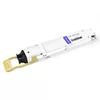
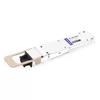
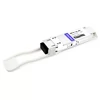
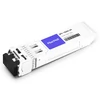
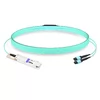
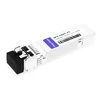
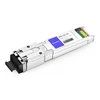
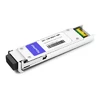
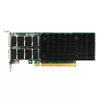
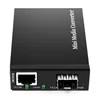
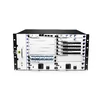
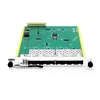
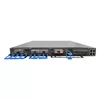
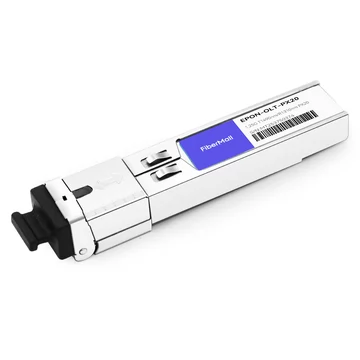
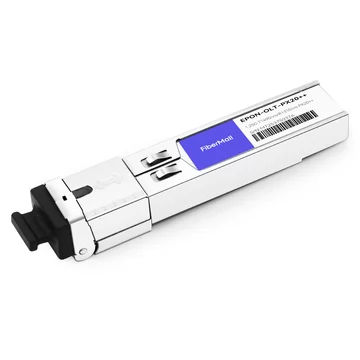
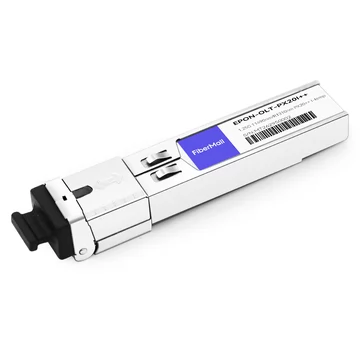
EPON SFP Transceiver
EPON SFP transceivers are among the devices that have seen the most significant performance improvements in recent years. Ethernet-based Passive Optical Networks (EPON) are currently one of the most attractive fiber optic networks, offering compact yet powerful devices capable of enabling high-speed data transmission over long distances.
What is an EPON SFP Transceiver?
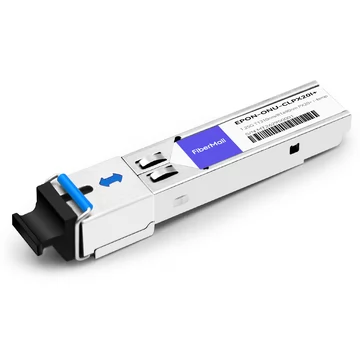
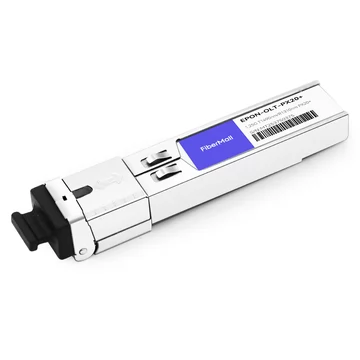
EPON SFP transceivers are small, hot-swappable devices that transmit optical data between network components for safe data transfer across Ethernet Passive Optical Networks. The module connects the Optical Line Terminal (OLT) at the service provider's side to Optical Network Units (ONUs) or Optical Network Terminals (ONTs) at the customer's premises. Its point-to-multipoint architecture efficiently manages both downstream and upstream data transmission over a single optical fiber, designed for high speeds over long distances. EPON SFP modules are widely used in FTTH implementations, enterprise networks, and telecommunication networks due to their robustness and scalability.
Define "EPON" (Ethernet Passive Optical Network) and its role in network infrastructure
EPON, or Ethernet Passive Optical Network, uses passive optical components in a point-to-multipoint network architecture to deliver broadband data, voice, and video services. It bases data transmission on Ethernet technology, which makes it cost-effective and easy to integrate with existing Ethernet-based networks. EPON plays an important role in modern network infrastructure by providing high-capacity fiber optic connections for broadband internet with minimal signal degradation over long distances. It is primarily used in Fiber to the Home (FTTH) and business networks to deliver efficient, low-latency, reliable, and scalable connectivity, supporting next-generation access networks worldwide.
How EPON SFP Transceivers Work
EPON SFP transceivers provide modular fiber-optic interface devices for Ethernet Passive Optical Network (EPON) connectivity. They transmit and receive optical signals over fiber optic cables between the Optical Line Terminal (OLT) at the service provider’s central office and the Optical Network Units (ONUs) at the subscriber’s premises. The optical transceiver converts electrical data signals into optical signals for transmission and converts received optical signals back into electrical signals. EPON SFP transceivers enable efficient, reliable, and high-speed bidirectional data transport over a single fiber in network infrastructure.
Breakdown of the working mechanism of SFP transceivers
SFP transceivers integrate data transmission and reception in a network system. These hot-swappable small modules convert electrical signals from network equipment into optical signals for transmission over fiber, and convert received optical signals back into electrical signals. They include a laser or LED for transmission and a photodetector for reception, enabling bidirectional communication. SFP transceivers support a wide range of standards, such as Ethernet, SONET, and Fibre Channel, making them essential for high-speed networking.
Benefits of Using EPON SFP Transceivers
The latest generation of EPON SFP transceivers offers several benefits thanks to their high speed and low cost. These transceivers support PON technologies, making them adaptable to existing systems while allowing for future expansion. They enable bidirectional data transmission over a single fiber, reducing the need for additional cabling and lowering costs. Moreover, their compatibility with many devices and compliance with industry standards improve network performance and simplify management.
Energy efficiency benefits of EPON technology
EPON (Ethernet Passive Optical Network) technology provides notable energy savings because it uses the fewest possible active elements in the network. Optical splitters are passive and require no power-hungry repeaters or amplifiers. As a result, overall power consumption is significantly reduced. EPON systems also allow efficient sharing of network resources and bandwidth. Advanced features enable Optical Network Units (ONUs) to enter sleep mode during periods of low traffic, further reducing power consumption. These features enhance the efficiency of EPON in modern broadband networks while minimizing energy use and environmental impact.
Top Applications of EPON SFP Transceivers
EPON SFP transceivers are extensively used across various network applications due to their effectiveness and reliability. Their major applications include:
Fiber to the Home (FTTH): Provides high-speed Internet services to residential users with very low latency.
Enterprise Networks: Offers flexible and cost-effective solutions for companies that require reliable connectivity.
Mobile Backhaul: Supports the connection of macro cell sites to the core network.
Campus Networks: Facilitates high-capacity data transfer between buildings in universities or corporate environments.
Use in fiber-to-the-home (FTTH) networks
EPON SFP transceivers play a significant role in Fiber-to-the-Home (FTTH) networks by delivering high-speed internet directly to homes and businesses. They provide multi-gigabit symmetric performance through Passive Optical Networks (PON), offering excellent bandwidth for streaming, gaming, and video conferencing. Their compact size and low power consumption make them suitable for large-scale FTTH deployments. Additionally, they help reduce deployment costs by minimizing the number of fibers required through wavelength division multiplexing.
EPON SFP vs. GPON SFP Transceivers
EPON SFP and GPON SFP transceivers are both used in fiber optic networking, but follow different standards with varying levels of efficiency. EPON is an Ethernet-based technology that provides symmetric 1.25 Gbps bandwidth in both upstream and downstream directions, making it popular where simplicity and cost-effective scalability are priorities. GPON, based on ITU-T standards, offers asymmetric bandwidth with downstream up to 2.5 Gbps and upstream 1.25 Gbps, which is ideal for high-bandwidth services such as IPTV and enterprise applications. GPON is more bandwidth-efficient for demanding applications, while EPON excels in reducing complexity and costs for large deployments. Network requirements should be carefully considered when choosing between the two standards.
Key differences in technology between EPON and GPON (Gigabit Passive Optical Network)
Data Transfer Techniques
Ethernet PON uses simple Ethernet protocols, which facilitate smooth integration with other Ethernet networks. GPON is based on the ITU-T G.984 standard and uses ATM and GEM (GPON Encapsulation Method) along with TDM-based traffic for more structured data transmission.
Physical Layer
GPON offers optimized bandwidth with asymmetric speeds of up to 2.5 Gbps downstream and 1.25 Gbps upstream. EPON provides symmetric bandwidth of 1.25 Gbps for both downstream and upstream, which is favorable for balanced traffic.
System Implementation and Related Issues
EPON has a simpler design, which reduces complexity and cost for carriers. GPON is a more advanced system that supports higher bandwidth and sophisticated encapsulation methods, but it requires more complex infrastructure.
Cost Effectiveness
EPON offers better cost-effectiveness due to its Ethernet-based protocols and simpler devices. GPON networks generally require higher investment for deployment and maintenance due to more advanced features.
Use Cases
EPON is best suited for business and residential environments with moderate bandwidth demands and a focus on low-cost, large-scale deployments. GPON is preferred for demanding applications such as FTTH, IPTV, and high-bandwidth enterprise solutions.
Frequently Asked Questions (FAQs)
What exactly is meant by an EPON SFP Transceiver?
An EPON SFP transceiver is a small, modular optical device used in Ethernet Passive Optical Networks (EPON). It is a compact, plug-and-play module that supports data transfer in EPON networks by converting electrical data to optical signals in the downstream direction and vice versa in the upstream direction.
Are there any benefits of adopting EPON SFP transceivers?
EPON SFP transceivers offer many advantages, including modularity, upgradability, and broad compatibility with network equipment. They also provide cost-effective, efficient transport of large amounts of data over passive optical networks.
Which specific range of data rates can be supported by EPON SFP transceivers?
Most EPON SFP transceivers support 1.25 Gbps data rates for both upstream and downstream operations, in accordance with IEEE 802.3ah EPON standards.
Is it possible for an EPON SFP transceiver to work with GPON systems?
No. EPON and GPON transceivers use different designs and protocols. They are not compatible with each other.
Which criteria should be taken into account while choosing an EPON SFP transceiver?
Key considerations include compatibility with the OLT/ONT equipment, wavelength and transmission distance requirements, compliance with IEEE 802.3ah standards, as well as operating temperature and environmental conditions.