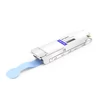
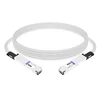
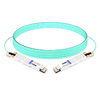
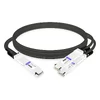
The Real Cost of Waiting on OEM 800G Breakout Cables
When your 800G switch ports are live, but the OEM breakout cables you need are quoted at 8–12 weeks, every day of delay pushes back cluster commissioning and burns project budget. This forces you to choose between expensive optics and risky third-party cables that may not handshake with your switch.
Network engineers building AI and HPC clusters face three predictable problems when sourcing 800G breakout DAC/ACC cables:
• Lead times kill schedules. OEM cables often ship in 8–12 weeks. By the time they arrive, rack power and cooling budgets have already been committed, leaving teams scrambling.
• Compatibility is uncertain. A passive DAC that works in one switch cage may fail in another because of EEPROM coding, thermal profile mismatch, or PAM4 signal margin.
• Cable type confusion slows procurement. DAC, ACC, and AEC look identical but serve different reaches and power budgets. Buying the wrong type means returns, re-cabling, and costly downtime.
Why FiberMall 800G Breakout Cables Drop Straight In
We treat 800G copper breakout cables as a compatibility product, not a standard commodity. Every order is verified against your specific switch and NIC part numbers before it ships.
Key Benefits:
• Guaranteed interoperability: Cables are tested extensively on NVIDIA, Cisco, Arista, Juniper, Dell, and Broadcom platforms.
• OEM-matched EEPROM: We program the exact vendor identifiers your switch expects, eliminating link-up failures.
• Fast global delivery: Stocked items ship the same day; most regions receive cables within 3–5 business days.
• Up to 90% savings vs OEM: Factory-direct pricing without the massive markup of branded cables.
DAC vs ACC vs AEC: Choose the Right Cable for Your Rack
Not every 800G link needs the same cable technology. The wrong choice wastes power, budget, or reach. Here is how the three main technologies compare:
• DAC (Passive Direct Attach Copper): Features no internal signal conditioning. It offers a maximum reach of 1–2.5 m with near-zero power consumption per end (<0.1 W). It is the best choice for same-rack deployments, offering the lowest cost and lowest latency.
• ACC (Active Copper Cable): Utilizes an analog redriver for signal equalization. It extends the maximum reach to 3–5 m (note: reaching 5 meters depends heavily on host platform signal margins). Power consumption is ~1.5 W at the OSFP end and ~0.6 W at the QSFP112 end. This is ideal for connecting adjacent racks while maintaining better signal integrity.
• AEC (Active Electrical Cable): Uses a digital retimer with Clock and Data Recovery (CDR). It pushes the maximum reach to 5–9 m, drawing 2.5–12 W of power per end. This is best for longer copper runs and maintaining signal integrity in strictly lossless networks.
Rule of thumb: Use DAC inside the rack, ACC to the next rack, and AEC when you need 5 m or more without utilizing expensive optics.
800G Breakout Configurations
FiberMall stocks the most common 800G fan-out options for AI data centers and cloud fabrics:
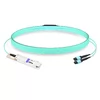
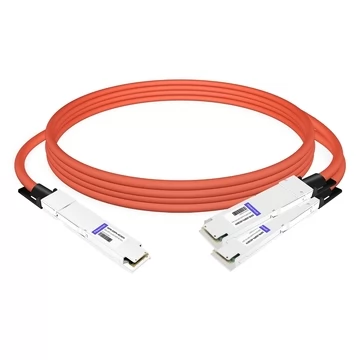
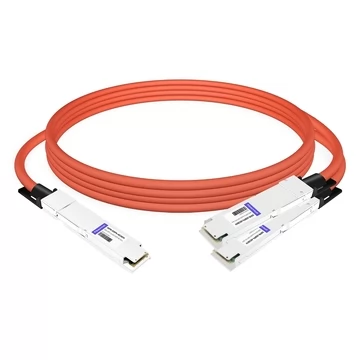
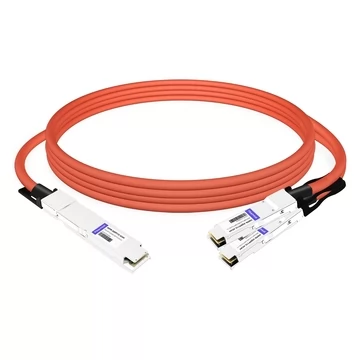
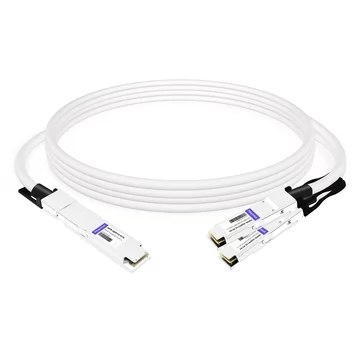
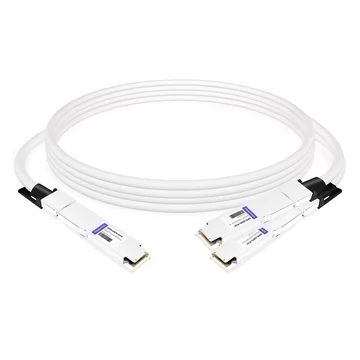
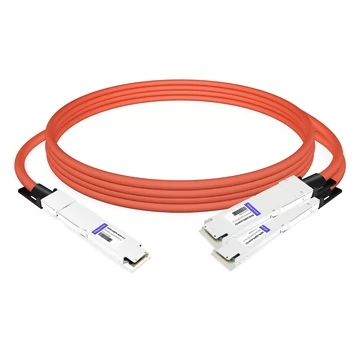
800G OSFP to 2 × 400G QSFP112
• Splits one 800G OSFP port into two 400G QSFP112 links.
• Ideal for ConnectX-7 / ConnectX-8 NICs and 400G server adapters.
• Available in DAC (0.5–2.5 m), ACC (1–5 m), and AEC (5–9 m).
800G OSFP to 2 × 400G OSFP
• OSFP-to-OSFP fan-out for switch-to-switch or switch-to-NIC links.
• Supports both finned-top and flat-top (RHS) connector styles.
• Common in NVIDIA Spectrum-4 fabrics and Twin-port OSFP cages on Quantum-2 platforms.
• Available in DAC (0.5–2.5 m), ACC (1–5 m), and AEC (5–9 m).
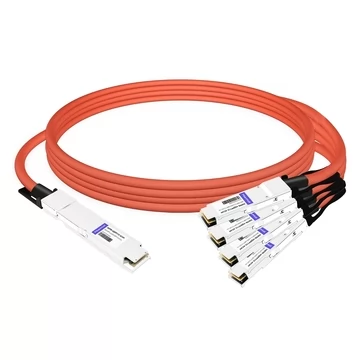
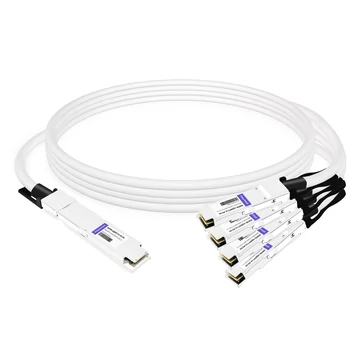
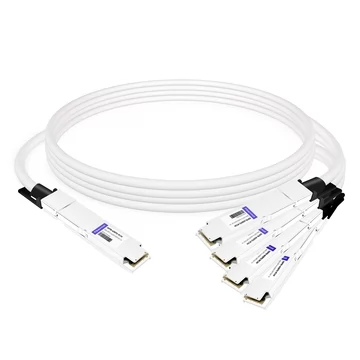
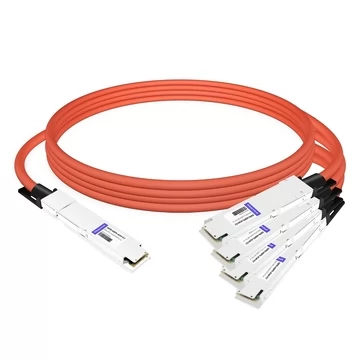
800G OSFP to 4 × 200G QSFP112 / OSFP
• Provides maximum port density for GPU clusters, connecting one 800G switch port to four 200G endpoints.
• Note: The 200G endpoints must support 100G-PAM4 signaling (e.g., NDR200) and are not backward compatible with 50G-PAM4 (HDR) logic.
• Reduces cable count and simplifies rack cable management.
• Available in DAC (0.5–2.5 m), ACC (1–5 m), and AEC (5–9 m).
Each configuration is available with custom cable lengths, jacket materials (PVC / LSZH), and vendor-specific EEPROM programming.
Technical Specifications
The core technical parameters for FiberMall's 800G Breakout DAC, ACC, and AEC families are as follows:
• Data Rate & Signaling: All three cable types support an 800 Gb/s aggregate data rate using 8 × 100G-PAM4 physical signaling.
• Breakout Options: All cable families are available in 2×400G and 4×200G configurations.
• Maximum Reach: DAC supports 1–2.5 m; ACC supports 3–5 m (host signal margin dependent); AEC supports 5–9 m.
• Wire Gauge: DAC uses 30 AWG (≤1.5 m) or 26 AWG (2–3 m); ACC uses 26 AWG exclusively; AEC uses 26–28 AWG.
• Power Consumption (OSFP End): DAC consumes <0.1 W; ACC consumes ~1.5 W; AEC consumes between 2.5 W and 12 W.
• Power Consumption (QSFP112 End): DAC consumes <0.1 W; ACC consumes ~0.6 W; AEC consumes between 0.6 W and 1.5 W.
• Latency: DAC offers <1 ns; ACC is <20 ns; AEC is <100 ns.
• Operating Temperature & Compliance: All cables operate between 0°C and 70°C, and fully comply with IEEE 802.3ck, OSFP MSA, and CMIS 5.0/5.2 standards.
Tested Platforms / Compatibility Matrix
We validate every 800G breakout DAC/ACC/AEC cable family on the platforms our customers deploy most often. Custom coding is always available for any switch or NIC not explicitly listed below.
• NVIDIA / Mellanox: Verified on Quantum-2 NDR switches (via Twin-port OSFP cages), Spectrum-4 SN5000, and ConnectX-7 / ConnectX-8 NICs. (Supports DAC, ACC, AEC)
• Cisco: Verified on Nexus 9000-GX2 / 9300-GX2. (Supports DAC, ACC)
• Arista: Verified on 7060X6 and 7800R3. (Supports DAC, ACC)
• Juniper: Verified on PTX / QFX 800G-ready platforms. (Supports DAC, ACC)
• Dell: Verified on Z9xxx series and PowerSwitch. (Supports DAC, ACC)
• Broadcom: Verified on Tomahawk 5 and Bailly reference NICs. (Supports DAC, ACC)
Use Cases
• AI / HPC GPU Clusters: Connect NVIDIA Quantum-2 switches (via Twin-port OSFP physical interfaces) to ConnectX-7 NICs in DGX / HGX nodes. Using 800G breakout cables significantly reduces the number of switch ports and optical transceivers required per rack.
• Cloud Data Center Leaf-Spine Fanout: Use 2×400G or 4×200G breakout cables to fan out high-density 800G spine ports into lower-speed leaf uplinks without needing to rip and replace existing switches.
• 400G-to-800G Migration: Bridge your existing 400G infrastructure to new 800G switches. Breakout cables allow you to reuse existing NICs and server adapters while seamlessly upgrading the core fabric.
• In-Rack and Adjacent-Rack Links: DAC keeps power consumption near zero for intra-rack connections. ACC safely extends that reach to adjacent racks when passive copper can no longer maintain PAM4 signal integrity.
FAQ
What is the difference between 800G DAC, ACC, and AEC?
DAC is passive copper with no signal conditioning—offering the lowest cost and power, but strictly limited to ~2.5 m. ACC (Active Copper Cable) adds an analog redriver chip to extend reach to 3–5 m. AEC (Active Electrical Cable) uses a digital retimer with CDR, reaching 5–9 m while maintaining strict signal integrity for lossless network fabrics.
How far can an 800G breakout ACC reach?
Most FiberMall 800G ACC breakout cables support up to 5 meters using 26 AWG copper. However, reaching the absolute 5-meter limit depends heavily on the cable gauge, host platform signal margins, and environmental conditions.
Which 800G breakout cable is compatible with NVIDIA Quantum-2 / Spectrum-4?
FiberMall 800G OSFP breakout DAC/ACC/AEC cables are rigorously tested on both Quantum-2 (InfiniBand NDR, utilizing Twin-port OSFP cages) and Spectrum-4 (Ethernet) platforms. We program exact NVIDIA-compatible EEPROM codes upon request.
What is the power consumption of an 800G breakout ACC?
Typical ACC power is ~1.5 W at the main OSFP end and ~0.6 W per breakout QSFP112 end, totaling roughly 2.7 W for a 1-to-2 configuration. By comparison, a passive DAC consumes <0.1 W per end.
Is QSFP112 backwards compatible with QSFP56 / QSFP28?
Yes, the QSFP112 form factor is mechanically backwards compatible with QSFP56 and QSFP28 cages. However, 800G-to-2×400G or 4×200G breakout operation strictly requires 112G-PAM4 (100G per lane) signaling on both ends to run at rated speeds; it will not properly handshake with legacy 50G-PAM4 (e.g., HDR) hardware logic.
Can FiberMall program custom EEPROM codes for my switch?
Yes. We can seamlessly match OEM part numbers or program vendor-specific identifiers for Cisco, Arista, Juniper, Dell, NVIDIA, Broadcom, and other core platforms.
What is the typical lead time for 800G breakout cables?
Standard stocked configurations ship the same day. Custom lengths, non-standard configurations, or specific custom EEPROM coding requests typically ship within just 3–5 business days.