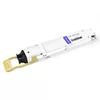
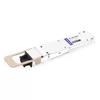
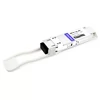
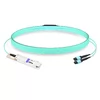
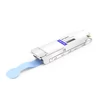
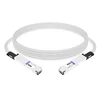
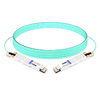
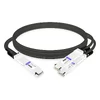
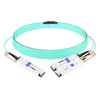
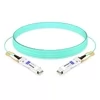
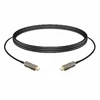
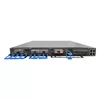
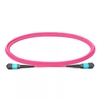
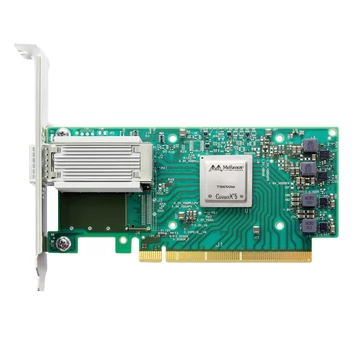
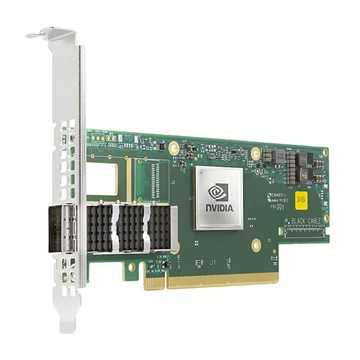
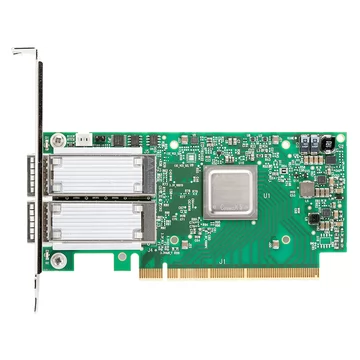
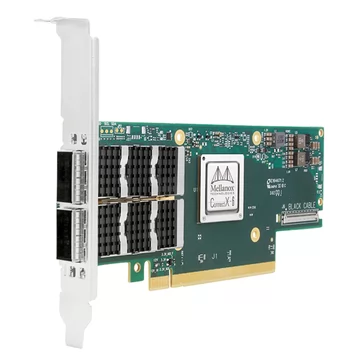
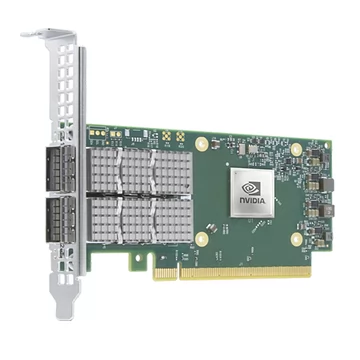
You're ready to push a server, storage node, or firewall to 40 Gigabit. You pick a card, then spend the next week cross-referencing which QSFP+ transceiver the adapter will accept, whether a DAC will establish a link, and whether that QSFP28 module you already own can operate in a 40G host.
A 40G QSFP NIC is only half the link. The other half is the optics or cable — and if the NIC, transceiver, and media do not match, you may get no link no matter how capable the card is. FiberMall supplies the Intel XL710-based card and the appropriate 40G QSFP+ transceiver, DAC, or validated AOC as one compatibility-tested order.
A Bare 40G Card Is a Puzzle You Didn't Sign Up For
Every major retailer sells the 40G NIC by itself and leaves the optics to you. That is exactly where 40G deployments can go sideways, because a QSFP+ port is not media-agnostic in the way a copper RJ45 port is.
The QSFP28 mistake. Buyers sometimes assume that because QSFP+ and QSFP28 modules share essentially the same mechanical form factor, a 100G QSFP28 module will automatically work in a 40G QSFP+ port. A standard 100G QSFP28 interface normally uses four 25 Gb/s electrical lanes, while a 40GbE QSFP+ interface uses four 10 Gb/s lanes. An XL710 adapter therefore cannot use an ordinary 100G-only QSFP28 module as a 100G device, and a QSFP28 module should never be assumed to support 40G operation unless the module explicitly supports a 40G mode and has been validated with the host. Intel specifies QSFP+ connectivity for XL710 adapters using 40GBASE-SR4, 40GBASE-LR4, and QSFP+ CR4 media.
Vendor coding. A QSFP+ transceiver contains identification and capability information in EEPROM, and the NIC's firmware and driver can enforce compatibility rules. A transceiver coded for one platform family is therefore not automatically guaranteed to work in another. Intel specifically recommends validated optics and cables for retail XL710 adapters, and some Intel retail XL710 implementations restrict supported optics. This makes module coding and interoperability testing a common source of problems in 40G server upgrades.
Multiple media types, one port. The same XL710 QSFP+ interface can be used with 40GBASE-SR4 optics, 40GBASE-LR4 optics, supported passive DACs, and appropriately validated active optical cables. These options cover very different reach, power, and cost requirements. Intel officially documents SR4, LR4, CR4 DAC, and 4×10G breakout support for the XL710 adapter family.
FiberMall removes these failure points by supplying the card with the appropriate optics or cable, coded and tested for the intended configuration.
40G QSFP+ NICs Available from FiberMall
FiberMall builds its 40G QSFP+ NICs around the Intel XL710 Ethernet controller family — proven 40GbE silicon designed for server, cloud, virtualization, and network-appliance applications. The XL710 family supports 4×10GbE, 1×40GbE, and 2×40GbE configurations over PCIe 3.0 x8 and provides hardware-assisted traffic processing, virtualization, and network-overlay offloads.
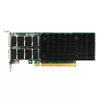
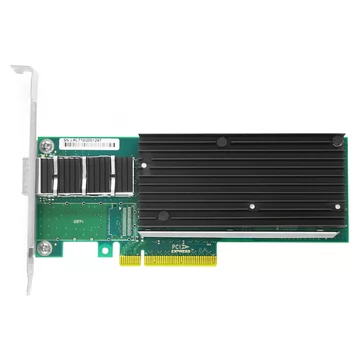
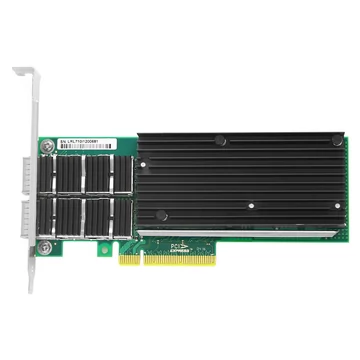
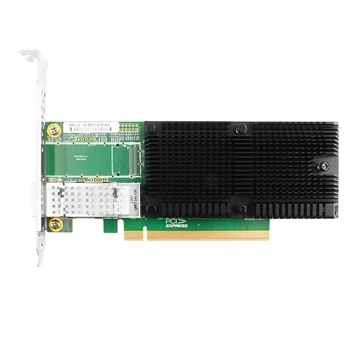
FMXL710-40G-Q1 — Controller: Intel XL710-BM1; Ports: 1× 40G QSFP+; Host Interface: PCIe 3.0 x8; Best For: single high-bandwidth uplinks, storage targets, firewalls, and network appliances.
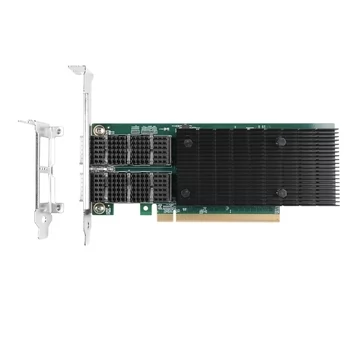
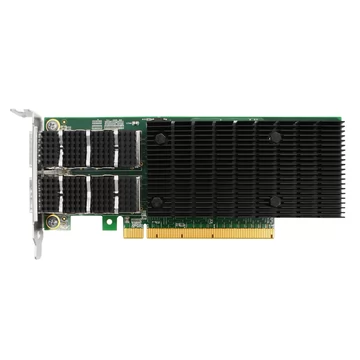
FMXL710-40G-Q2 — Controller: Intel XL710 series; Ports: 2× 40G QSFP+; Host Interface: PCIe 3.0 x8; Best For: link aggregation, dual-homed servers, virtualization hosts, and redundant network paths.
FMXL710-40G-Q1 — Single-Port 40G QSFP+
One 40G QSFP+ port gives a server or appliance a single high-bandwidth Ethernet path. The Intel XL710 controller provides network-virtualization offloads for technologies including VXLAN and NVGRE, Intel Ethernet Flow Director, checksum and segmentation offloads, SR-IOV, and iSCSI acceleration. The XL710 controller architecture supports up to 128 SR-IOV Virtual Functions per device, although the usable number depends on the adapter configuration, operating system, driver, and virtualization environment.
That makes the card suitable for a dedicated storage node, a high-throughput firewall, a virtualization host, or a server uplink to a 40G aggregation or spine switch.
FMXL710-40G-Q2 — Dual-Port 40G QSFP+
Two 40G QSFP+ ports provide redundancy, multiple network paths, or aggregate bandwidth. Depending on the operating system and switch configuration, the ports can be used with link aggregation, active/standby failover, or separate network fabrics so that a cable, module, switch-port, or path failure does not have to take the host offline.
The XL710 dual-port architecture supports up to 64 SR-IOV VFs per port, for up to 128 VFs per adapter. It is well suited to dual-homed servers, virtualization hosts, security appliances, and storage systems that require multiple network paths.
Both models use a PCIe 3.0 x8 host interface and can be installed in a suitable PCIe x8 or x16 slot. XL710 QSFP+ adapters support native 40GbE operation and can also support 4×10GbE breakout configurations with compatible breakout media and appropriate software configuration. Intel's XL710 adapter documentation explicitly lists QSFP+ CR4-to-4×SFP+ breakout connectivity.
Each FiberMall card is supplied with full-height and low-profile brackets. The XL710 controller also supports jumbo frames, Data Center Bridging, Priority-based Flow Control, and Enhanced Transmission Selection. IEEE 802.1Qbb defines Priority-based Flow Control, while IEEE 802.1Qaz defines Enhanced Transmission Selection. Intel documents controller-level jumbo-frame support of up to approximately 9.5 KB; the practical MTU available to the operating system can depend on the driver, OS, and adapter implementation.
Match the 40G Media to Your Reach
The card stays the same. The transceiver, DAC, or AOC installed in it determines the optical or electrical reach — and FiberMall supplies and tests the pairing so you are not left guessing which media will establish a stable link.
40GBASE-SR4 — 100 m over OM3 or 150 m over OM4/OM5 multimode fiber; MPO/MTP parallel-fiber interface; typically used for intra-rack, row-to-row, and short data-center server-to-switch links. IEEE-aligned 40GBASE-SR4 implementations use four optical lanes and support 100 m over OM3 and 150 m over OM4-class fiber.
40G CSR4 / extended-reach SR4-class optics — typically up to 300 m over OM3 and 400 m over OM4, depending on the specific vendor and transceiver; MPO/MTP multimode interface; suitable for longer data-hall links. CSR4 and similar extended-reach implementations should be treated as vendor-specific extensions rather than assuming every 40G SR-class module provides the same reach. Cisco, for example, specifies its 40G CSR4 implementation for extended MMF reach up to 400 m.
40GBASE-LR4 — up to 10 km over single-mode fiber; LC duplex interface; typically used for building-to-building connections, campus networks, and longer data-center interconnects.
40G QSFP+ DAC — typically used for short copper connections within or between adjacent racks; passive DAC lengths are commonly available up to about 7 m, depending on the adapter and cable implementation. For Intel adapter families using compatible direct-attach media, Intel documents passive cable lengths of up to 7 m.
40G QSFP+ AOC — available in fixed, factory-terminated lengths depending on the AOC SKU, commonly from a few meters to tens of meters and, for some products, up to approximately 100 m; suitable for multi-rack links where copper DAC is too short. Unlike a detachable SR4 transceiver connected to an OM3 or OM4 patch cable, an AOC is a complete cable assembly, so its reach is specified by the AOC SKU rather than by an interchangeable external fiber type.
One XL710 QSFP+ port can also be configured for four 10GbE links using a supported QSFP+-to-4×SFP+ breakout DAC or equivalent validated breakout media. Intel explicitly documents 40G QSFP+ CR4-to-4×SFP+ breakout support on XL710 adapters.
For example, an XL710 server port can connect through a breakout cable to four 10G SFP+ switch ports when the adapter, driver, and switch configuration support the required breakout topology. If your deployment requires 40G-class QSFP+ connectivity on one side and 4×10GbE connectivity on the other, the same XL710 platform can serve that role.
QSFP+ vs QSFP28: What Actually Works in a 40G NIC
The ports and modules look almost identical mechanically. The electrical signaling and supported Ethernet modes are not the same.
A conventional 40G QSFP+ Ethernet interface carries four 10 Gb/s electrical lanes. A conventional 100G QSFP28 interface carries four 25 Gb/s electrical lanes. The Intel XL710 is a 10/40GbE controller and Intel's XL710 QSFP+ adapters are specified for 40GBASE-SR4, 40GBASE-LR4, CR4 DAC, and 4×10GbE breakout operation — not 100GbE operation.
As a result, inserting a standard 100G-only QSFP28 module into an XL710 QSFP+ port does not turn the card into a 100G adapter. The XL710 host does not provide four 25 Gb/s lanes.
Some QSFP28 host ports and some optical modules are designed to support more than one Ethernet rate. In those cases, a 40G QSFP+ module may operate in a QSFP28 host port only when the host platform explicitly supports 40GbE mode and the module is supported by that platform. This is a host-platform capability, not an automatic property of every QSFP28 cage.
The practical rule for an Intel XL710 card is simple: use validated 40G QSFP+ optics, DACs, breakout cables, or AOCs, and do not assume that a 100G-only QSFP28 module will work. Intel maintains specific compatibility guidance for optics and cables used with XL710 adapters.
When you buy the NIC and optics together from FiberMall, the objective is to enforce that compatibility before shipment so the card arrives with media intended to interoperate with it.
Driver Compatibility: Intel XL710, Mature Multi-OS Support
The Intel XL710 has been deployed for many years, and one of its advantages is the maturity of its driver ecosystem. The exact driver name and support model, however, differ by operating system.
Linux — XL710 is supported by Intel's i40e driver. The i40e driver is part of the upstream Linux kernel and Intel also continues to publish its 700 Series Linux driver package. Distribution-specific support depends on the kernel and distribution release in use.
VMware ESXi — Intel 700 Series adapters use the native i40en ESXi driver. Supported driver, NVM firmware, and ESXi combinations should be checked against Intel's compatibility information and the VMware Compatibility Guide rather than assuming that every ESXi image supports every XL710 configuration automatically.
Windows Server — Intel 700 Series adapters use the Intel i40ea driver family rather than the Linux i40e driver. Intel's current Ethernet software releases continue to list 700 Series support for Windows Server versions including Windows Server 2019, 2022, and 2025, with release-specific support also documented for Windows Server 2016.
FreeBSD — XL710 devices are supported by the ixl driver. FreeBSD documents ixl(4) as the Intel XL710-family Ethernet driver, and Intel continues to include FreeBSD support for its Ethernet 700 Series in current software documentation.
That matters for a card expected to remain in a remote server or appliance for years. A mature controller with drivers available across mainstream operating systems is generally easier to maintain than hardware that depends entirely on a proprietary driver branch tied to a narrow range of OS releases.
A common comparison in the 40G market is the Mellanox/NVIDIA ConnectX-3 Pro EN. ConnectX-3 Pro provides capabilities such as RoCE that the XL710 does not offer, making it attractive for older RDMA deployments. However, ConnectX-3 and ConnectX-3 Pro are legacy generations; current NVIDIA MLNX_EN releases no longer support them directly and NVIDIA refers users requiring these adapters to the older 4.9 LTS branch.
The XL710 is also a mature-generation controller rather than a current high-end architecture, but Intel continues to publish 700 Series software and driver information. For conventional 40GbE server, storage, virtualization, and appliance workloads that do not require RoCE, the XL710 therefore remains a practical option when its feature set, OS support, and media compatibility match the deployment.
Power consumption should be compared under equivalent media and port configurations rather than using a single figure for the entire XL710 family. Intel's own XL710-QDA1/QDA2 data shows typical adapter power ranging from approximately 3.4 W for a single-port CR4 configuration to 8.5 W for a dual-port LR4 configuration, with SR4 configurations falling between those values. This makes the XL710 relatively power-efficient in some short-reach configurations, but direct power comparisons with another NIC should use the same port count, link speed, media type, and measurement conditions.
40G QSFP NIC FAQ
Can I use a QSFP28 (100G) module in a 40G QSFP+ NIC?
Not as a general rule. A standard 100G-only QSFP28 module uses a four-lane 25 Gb/s host electrical interface, while an XL710 QSFP+ adapter is a 10/40GbE platform. The XL710 does not gain 100GbE capability simply because a QSFP28 module physically fits the cage.
If a particular module explicitly supports 40G operation, compatibility still depends on the host, firmware, EEPROM coding, and driver. For an Intel XL710 deployment, the safe approach is to use validated 40G QSFP+ optics, DACs, or AOCs rather than assuming that an existing 100G QSFP28 module will work.
Which transceivers, DAC, and AOC cables work with an Intel XL710 NIC?
Use optics and cables that have been validated for the specific XL710 adapter implementation. MSA compliance alone does not guarantee that every third-party QSFP+ optic will be accepted by every retail or OEM XL710 adapter because firmware, NVM, and module-identification policies can differ. Intel provides specific compatibility guidance for its XL710 adapters.
For optical links, common 40G options include 40GBASE-SR4 for 100 m over OM3 or 150 m over OM4/OM5, extended-reach CSR4-class optics for longer multimode links where supported, and 40GBASE-LR4 for up to 10 km over single-mode fiber.
For short links, compatible 40G QSFP+ passive DACs are commonly used for rack-level connectivity, while validated AOCs provide longer fixed-length optical connections without separate transceivers and patch cords. FiberMall codes and tests the intended module or cable against the card before shipping.
Is the Intel XL710 still supported now that it's discontinued?
The exact lifecycle status depends on the specific Intel retail, OEM, or third-party XL710-based SKU, so the status of a particular adapter should be checked by part number rather than treating every XL710 card as identical.
More importantly for deployed systems, controller lifecycle and software availability are separate issues. Intel continues to publish Linux i40e, Windows i40ea, VMware i40en, and other 700 Series software and compatibility information. Intel's 2026 Ethernet software releases still include the 700 Series.
FiberMall supplies its XL710-based cards with its stated maintenance and warranty program. This can be important compared with used-market legacy adapters, where warranty coverage may depend entirely on the individual seller.
What is the difference between a 40G QSFP+ NIC and a QSFP28 NIC?
The mechanical form factors are closely related, but the electrical interfaces and supported Ethernet rates differ. A conventional 40G QSFP+ interface carries four 10 Gb/s lanes for 40GbE, while a conventional 100G QSFP28 interface carries four 25 Gb/s lanes for 100GbE.
A 40G XL710 QSFP+ NIC therefore cannot operate as a 100G NIC simply by installing a QSFP28 transceiver. Conversely, a QSFP+ module can work in some QSFP28 host ports when that host explicitly supports 40GbE operation, but this capability must be confirmed for the specific switch or NIC.
Do you sell the NIC and the 40G optics as a tested kit?
Yes. This is FiberMall's core differentiator. FiberMall can supply the XL710-based NIC together with compatible QSFP+ transceivers, DAC/AOC cables, and fiber cabling as one tested configuration.
Instead of purchasing the NIC from one supplier and then trying multiple optics or cables to find a combination the adapter accepts, the card and link media can be matched before shipment. That means one purchase order, one shipment, and one engineering team responsible for validating the complete link.
Do you offer volume pricing for multi-server 40G deployments?
Yes. Volume pricing is available for multi-card, multi-host, and OEM/ODM deployments. FiberMall's engineering team can provide bill-of-materials pricing covering the NIC, transceiver or DAC/AOC, and associated cabling.
For standard configurations, quotations can typically be prepared within 24 hours. Custom bracket configurations and private-label branding are also available for qualifying projects.