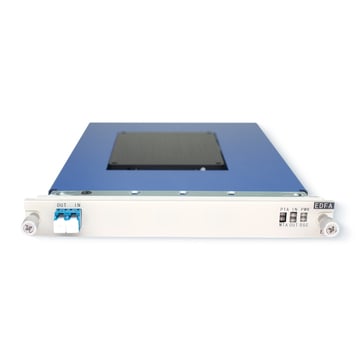
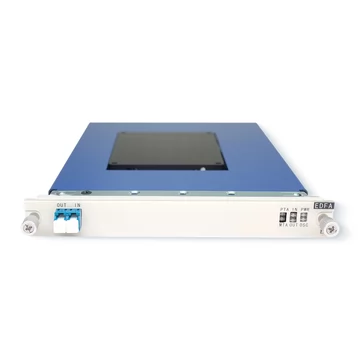
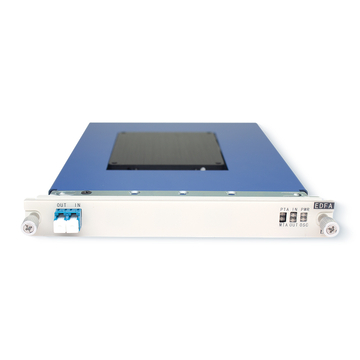
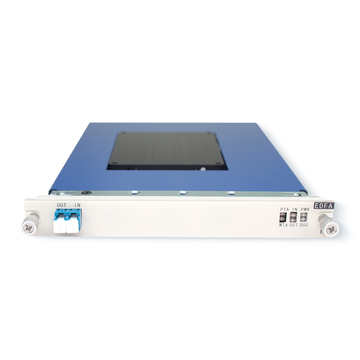
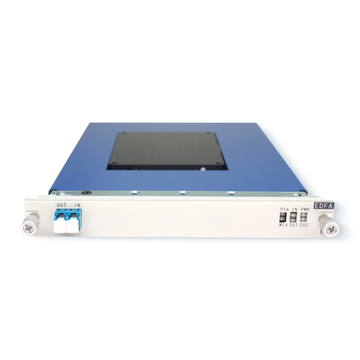
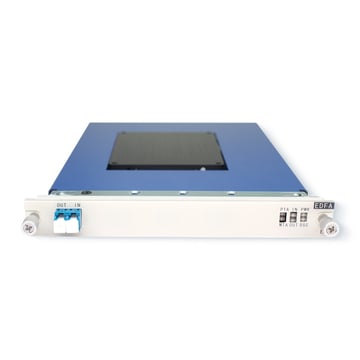
Every optical link has a power budget—a limit on how far a signal can travel before attenuation depletes the power margin. When that budget runs out, the solution is not adding more transceivers or tighter connectors; it is amplification. An erbium-doped fiber amplifier (EDFA) boosts multiple wavelengths simultaneously without converting them back to electrical signals, allowing an entire DWDM or FTTH system to reach further without requiring a network rebuild.
The Cost of Getting Amplification Wrong
Amplifiers may look interchangeable on a spec sheet, but deploying the wrong one quietly degrades a network. The failure modes are predictable and costly:
· Wrong gain profile produces uneven power across channels, meaning some wavelengths arrive strong while others fall below the receiver's threshold.
· Excess noise figure accumulates over cascaded spans, shrinking the reach of a long-haul link with every additional amplifier.
· A CATV-grade amplifier dropped into a DWDM plant lacks the gain-flattening and control modes that a multi-channel system depends on.
When this happens, engineers see the results: channels that fail intermittently, links that cannot be extended without a total redesign, and replacement hardware that arrives without the documentation needed to support it.
The most common mistake is treating an EDFA as a commodity. It is not. The band, amplifier type, and control mode all must match the deployment perfectly—and the supplier must possess the expertise to tell you which one fits.
EDFA Amplifiers Matched to the Deployment
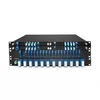
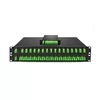
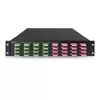
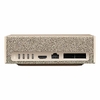
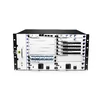
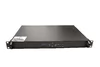
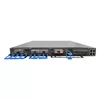
FiberMall's EDFA lineup covers the three primary amplifier positions used in real-world networks, operating in both the C-band and L-band.
Key Benefits:
· Correct gain, flat across the channel plan: Gain-equalization filtering keeps per-channel power consistent so no wavelength is lost at the receiver.
· Low noise figure for multi-span reach: A low noise figure compounds into longer cascaded links, ensuring more than just a cleaner first hop.
· Factory-direct supply: Enjoy competitive pricing on amplifiers specified and tested to match your exact network, free from reseller markups.
The result is an amplifier that performs exactly as the link budget requires.
Amplifier Types & Specifications
Choosing the right EDFA starts with where it sits in the link. Each position imposes different requirements on gain, input power, and noise figure.
Booster Amplifier (Transmit Side)
A booster sits immediately after the transmitter or multiplexer. It takes a relatively high input power and raises it to launch a strong signal down the fiber. Boosters prioritize high output power and moderate gain.
In-Line Amplifier (Mid-Span)
An in-line amplifier sits between spans in a long-haul link. It compensates for the attenuation of the preceding fiber while keeping noise accumulation low enough to preserve reach across multiple cascades.
Pre-Amplifier (Receive Side)
A pre-amplifier sits just before the receiver or demultiplexer. It handles a low input signal and provides high gain with a low noise figure, recovering a weak signal so the receiver can successfully resolve it.
Representative Specifications
Instead of a standard chart, here are the typical specification ranges you will encounter when evaluating these amplifiers:
· Operating Band: Typically operates in the C-band (1528–1565 nm) or L-band (1570–1610 nm).
· Gain: Ranges from 12 to 40 dB, depending heavily on the specific amplifier type (booster, in-line, or pre-amp).
· Output Power: Generally ranges from 13 to 37+ dBm. Higher outputs (up to 37+ dBm) are typically achieved using EYDFAs for high-power CATV applications.
· Noise Figure: A standard typical rating falls between 4.5 and 6 dB.
· Channel Plan: Designed to support 40 channels (at 100 GHz spacing) or 80 channels (at 50 GHz spacing).
· Control Modes: Supports Automatic Gain Control (AGC), Automatic Power Control (APC), and Automatic Current Control (ACC).
· Management: Can be managed via SNMP, RS-232, or a web-based interface.
· Pump Wavelength: Utilizes 980 nm, 1480 nm, or a combination of both.
· Connectors: Compatible with SC, LC, FC, or ST connectors using UPC or APC polishes.
How to Choose the Right EDFA
Three primary questions resolve most amplifier selections:
1. Which band? The C-band (1528–1565 nm) is the standard workhorse for DWDM transport. The L-band (1570–1610 nm) extends capacity when the C-band is exhausted. Match the amplifier band to the wavelength plan already deployed in the network.
2. Which position? Booster, in-line, or pre-amplifier. This dictates the gain and input-power requirements. A booster handles high input, while a pre-amplifier must carefully recover a weak signal.
3. What output power and noise figure? These metrics are dictated by the link budget. The required output power must cover the span loss, while the noise figure determines how many total spans the link can sustain.
4. Need help? If the answer is not obvious, send your link budget or channel plan. FiberMall engineers will map it to a specific model rather than leaving you to guess from a catalog.
Applications
DWDM Transport
In a DWDM system, an EDFA boosts all channels simultaneously, removing the need for per-channel regeneration. FiberMall amplifiers support 40- and 80-channel plans with the precise gain flatness and control modes a multi-wavelength system requires.
CATV & FTTH Distribution
For CATV and FTTH networks, high-power erbium-ytterbium-doped fiber amplifiers (EYDFA) drive multi-port distribution. The output power scales effectively to feed 8, 16, 32, or more ports for PON and cable plants.
Long-Haul & OTN Spans
Cascaded EDFAs extend reach across metro and long-haul spans. A low noise figure and exceptional gain stability keep successive amplifiers from compounding into catastrophic signal loss.
Frequently Asked Questions
What is the difference between C-band and L-band EDFA?
C-band EDFAs operate around 1528–1565 nm, the standard window for DWDM transport. L-band amplifiers cover 1570–1610 nm and are used to add capacity beyond the C-band. The choice depends entirely on which wavelengths the network's mux/demux and transceivers already utilize.
What is the difference between a booster and a pre-amplifier?
A booster amplifies a strong signal at the transmit side to launch it down the fiber, emphasizing high output power. A pre-amplifier recovers a weak signal at the receive side, emphasizing high gain and a low noise figure. An in-line amplifier sits mid-span and balances both requirements.
How do I calculate the gain and output power I need?
Start from the link budget: calculate total span loss minus available transmitter power and receiver sensitivity. The required gain closes that gap, and the output power must cover the loss of the next span. FiberMall engineers can run this calculation for you from a channel plan or span-length table.
Can EDFAs be cascaded for long-haul links?
Yes. Cascaded EDFAs extend reach across multiple spans, but each amplifier adds noise to the system. A low noise figure and stable gain are what make successive spans viable, which is why an amplifier's noise figure matters just as much as its raw gain.
What control modes and management options are supported?
Most FiberMall EDFAs support automatic gain control (AGC), automatic power control (APC), and automatic current control (ACC). Depending on the specific model, they can be managed via SNMP, RS-232, or a web interface.
Can an EDFA amplify a single wavelength, or only DWDM?
An EDFA will amplify any signal within its operating band, from a single wavelength up to a full multi-channel plan. It is highly effective in both single-channel and multi-channel systems.