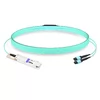
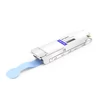
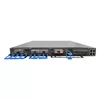
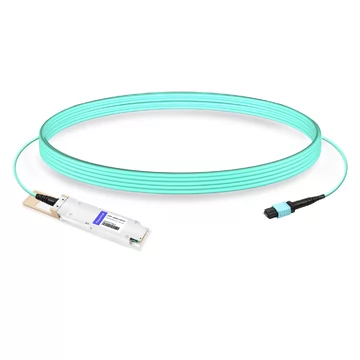
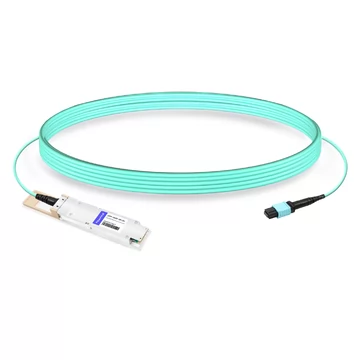
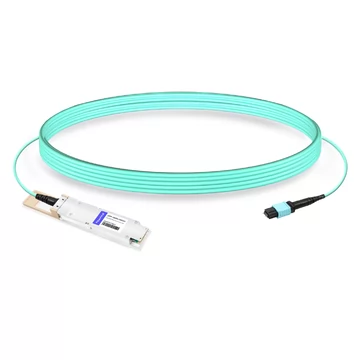
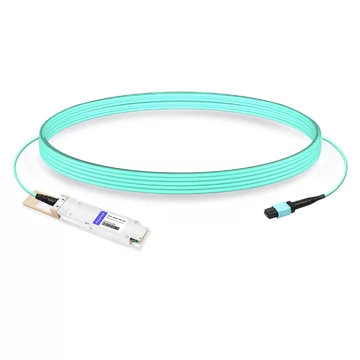
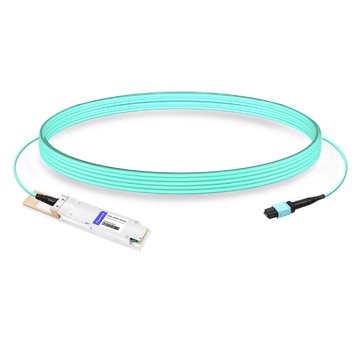
400G OSFP Optical Module for Liquid-Cooled Data Center
The rapid development of data-intensive applications is driving demand for next-generation data center infrastructure. Liquid cooling solutions combined with advanced 400G OSFP optical modules are leading the way in addressing key challenges such as thermal efficiency and high-speed connectivity. These cutting-edge technologies are transforming modern data centers, enhancing performance, and paving the way for greater energy sustainability.
Introduction to 400G OSFP Optical Modules in Data Centers
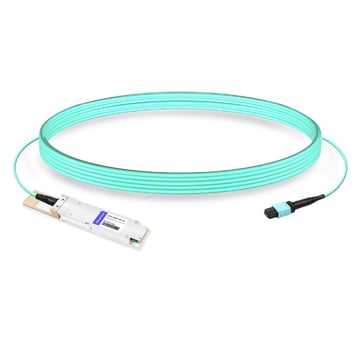
400G OSFP, aka Octal Small Form-factor Pluggable optical modules, are compact high-output transceivers designed primarily for the escalating traffic in a typical data center. These elements provide up to 400 Gb/s worth of data transfer, shifting over long distances with minimum delay, hence ensuring fast-moving networks. OSFP transceivers concentrate on power reduction and heat removal since these factors are fundamental in increasing the number of data centers without undermining their operational performance. With such a small configuration, it is possible to ensure easy installation and servicing of the components without technical hitches, and features such as compliance with new high-performance network-enhancing protocols assure easy deployment. All these aspects together make 400G OSFP modules a basic solution that covers the needs of changing data center specifications.
Overview of optical modules and their role in modern data centers.
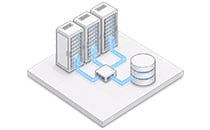
Data centers use optical modules to support the rapid transmission of data across optical fibers. The work involves the transformation of electrical signals into optical signals and back again, to enable communication between many devices, which include servers, switches, and storage. In addition to an immense increase in the traffic of data and the developments of cloud computing, came the necessity to upgrade the optical module technologies like QSFP, SFP, CFP, and OSFP for scaling up bandwidth and efficiency of the network. These modules, which come in a wide range of standards including 10G, 40G, 100G, etc., allow data centers to provide the needed performance, yet in an energy-efficient and low-sensitivity manner. Their modularity and the fact that they have been developed to accommodate changing networking requirements make them indispensable in the development of data centers that are sustainable and scalable.
The Role of Liquid Cooling in High-Density Data Centers
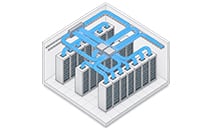
One of the most effective techniques for high-density data centers is the liquid cooling system. Therefore, in liquid cooling, liquids with high thermal rating are used for better heat management. Liquid cooling reduces the heat resistance of components such as the CPU, GPU, and memory modules by circulating the coolant through them, avoiding the generation of excess heat and maintaining the temperatures of the components so that more work can be done. This strategy does not only increase the performance or reliability, but also reduces the amount of energy consumed since lower cooling supplementary systems require lower energy output. Further, since liquid cooling assists in increasing the density of racks, it thus favors the demand for many computational capabilities, especially in the case of data centers that run AI, ML, and other such heavy workloads.
Explanation of liquid cooling technology and how it works
For 400G OSFP liquid cooling to work, a heat transfer fluid, namely water or a cooling medium, is circulated through the heat-producing sections of the system’s components, i.e., CPU, GPU, memory, amongst others. The heat absorbed by the fluid is taken to a condenser or a heatsink, where airflow takes place. Pumps assist in the circulation of the liquid, hence facilitating the cooling systems, while reservoirs help in the maintenance of coolants in the cooling systems, i.e., PCs.
Key Benefits of Liquid-Cooled 400G OSFP Modules
Thermal Management: Liquid cooling extracts excess heat from the high-power 400G OSFP Modules while keeping the temperatures within an acceptable range for their efficient operation. This helps in retaining higher reliability of the systems even when they are extensively used.
Energy Efficiency: Liquid cooling reduces the utilization of air conditioning units that were previously utilized for this purpose; thus, giving the benefits of reduced power, requiring less energy, and having less impact on the environment.
Scale: A specific performance requirement was to achieve a certain maximum density of the modules within the chassis at that time, as compact solutions were needed to enable a high density of applications in modern data centers.
Performance: Liquid cooling designs enhance the module design to function without loss of performance and risk of thermal slowdown in the transmission of very large amounts of data within the modules.
Operational Quietness: As opposed to air cooling systems, where fans are required, people often find it quite loud. In data centers, liquid cooling is quiet, enhancing the working conditions because there is little or no fans to interrupt the normal office environment.
Enhanced thermal management for improved module longevity
Enhancement of thermal control is crucial to extend the life span and sustain reliable performance of the hardware modules involved. With the help of heat exchangers that are highly efficient, these cooling systems are able to reduce the temperatures that the systems are working at by passing the heat from the hot region into the cold liquid or vice versa. In contrast studies, it is proven that the liquid cooling system provides lower thermal resistance than ordinary air cooling methods, hence the danger of thermal damage is reduced, as well as possibilities of overheating. Higher-level feedback and control systems, which are present within the liquid cooling mechanism, further offer ambient temperature management, thereby making it possible to change the thermal load ahead of time. This includes and fosters efficient heat handling and the control of the introduced interference therein; wear of parts becomes less, and hence the life of the components increases. Such a design method-based approach ensures the reliability of the system, which performs in aggravated conditions, employing air cooling with 400G OSFP liquid cooling.
Technical Overview of 400G OSFP Modules Designed for Liquid Cooling
When manufactured for the active liquid cooling solutions, the 400G OSFP-based modules come with a few characteristics that contribute to improving thermal and operational efficiency in densely packed high-performance data centers.
Better Cooling Design: More importantly, the introduction of liquid cooling is a more efficient way of getting rid of the heat when compared to traditional air cooling. In this case, since high-power transceivers will be operated at any point in time, it is perfectly normal for the equipment to generate some heat that must be controlled.
Efficient Space Design: In particular, the port configuration is available for the OSFP version of optical socket, which enables a very high port count, which is imperative for bandwidth improvement whilst saving on office space. The liquid cooling helps in solving the thermal design issues, even while developing delicate and thin high ports.
Increased Savings in Power Consumption: Without the much air cooling needed, this kind of module operates using liquid, which eliminates a significant amount of power wastage, bringing down operational costs within the set objectives of such data centers.
Better Dependability: The thermally stable environment reduces risks related to damage resulting from overheating, including component damage and efficiency loss. This guarantees consistent reliability as well as increases the lifespan of the modules.
Obedience and Suitability: These modules are made to meet the standards, but also support the required future-proofing scaling of such communication networks, more so now when it comes to attaining 400G from different perspectives.
Architecture and design considerations for liquid-cooled OSFP modules
The liquid cooling design of OSFP (Octal Small Form-factor Pluggable) modules aims at thermal stability due to 400G and 800G transfers. Additionally, there is a need to note to the reader with comprehension that one of the initial design challenges is housing of internal microchannels or cooling plates, which manages the circulation of the liquid along with the heat removal from the photonics and the electronics. The system works both when the contents are idle and when they perform intensive processes.
Market Trends for 400G Optical Modules and Liquid Cooling Adoption
The demand for internet traffic rises drastically, including cloud computing, artificial intelligence applications, as well as the evolution towards 5th generation networks, thus 400G optical modules are becoming more and more popular. Both Enterprises and hyperscalers are shifting towards 400G to sufficient bandwidth that is economically feasible and operationally scalable as well. This demand drive brings in the recent adoption of liquid cooling systems, as the use of air cooling systems has been surpassed. Critical roles in managing the increased thermal workload of complex and high-performing machinery.
Current market adoption rates of 400G OSFP with liquid cooling
The use of 400G OSFP modules, which apply liquid cooling systems, is still in its infancy, but the tendency for such power and heat-demanding routers is growing, especially among hyperscaling data centers. The dominant technology companies and cloud providers are already starting to employ liquid cooling in order to manage the 400G power stress because power-hungry modules require considerable improvements in heat dissipation and energy consumption. It has been noted that markets in which the adoption of liquid cooling, within 400G OSFP modules, is growing are mainly high data growth markets. This is due to developments in cooling and eco-friendly policies and objectives. It should be noted that these penetration levels vary by country and sector. Nonetheless, there is an increasing number of projects and even classic use cases that are proving that such advancements are on the path to mass adoption. It is expected that as the technology is refined, the penetration into the masses of these 400G OSFP liquid cooling aspects will take place shortly.
Frequently Asked Questions (FAQs)
Why and how enhanced 400G OSFP optical modules depend on liquid cooling?
Compared to common air-cooling, there are no such limitations, as air works as a heat shield between such a heat-generating device and its surroundings, and more efficient methods are used, such that devices such as 400G OSFP are kept in the temperature range of the usage. This function aids in preserving the module for a longer period as well as allows for high traffic loads consistent with no loss of performance, overall assisting data centers in greater operational needs.
Are 400G OSFP optical modules compatible with existing data center infrastructures?
Such modules contain built-in backward compatibility and ensure seamless integration with existing data center architectures. They come in a universal form factor and can be used in many different extra pieces of equipment, thus allowing them to be incrementally updated without the need of tearing down the current infrastructure.
What sustainability advantages do 400G OSFP optical modules offer?
They considerably heighten power efficiency and do not pose heating challenges, especially on models with liquid cooling. They work well to conserve data centers’ power by using less energy for a greener environment, and to adhere to the company’s energy policies.