A Comprehensive Guide to MPO Cables
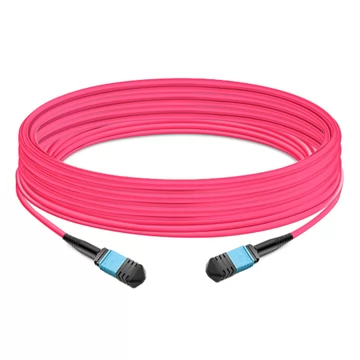
MPO (Multi-fiber Push-on) fiber optic cables are advanced components designed to enhance data transmission rates in modern networks in an efficient and scalable manner. The design, advantages, and applications of these cables are of immense reference value to any professional working within complex fiber optic system hierarchies.
Introduction to MPO Cables
MPO is a recently coined term for Multi-Fiber Push-On cable due to its ability to maintain high-quality transmission characteristics in very dense fibre optic networks. They are the combination of many fibers within one connector, which allows for a reduction of the cable volume and the ease of installation, unlike other cables with multiple alo cables. MPO cables, however, stand out as the predominant cabling scheme in the interior management network within data center topologies depicted by combinations of several cabling protocols such as Ethernet and InfiniBand. Their functionality towards the trends of contemporary optics makes their application in any case, around high-speed network expansion, rather imperative.
What are MPO Cables?
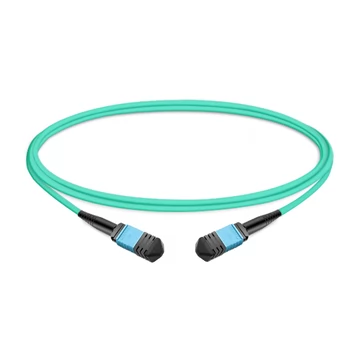
In dense network environments, however, more advanced fiber optic connectors are available, known as MPO (Multifiber Push-On) cables. These connectors provide multiple strands of optical fiber, packaged into a single connector. This design minimizes the amount of space taken by data cables while allowing the client to transmit large amounts of data. MPo cables applications are mainly due to the basis of modern data center bases. This is because redundant services can be offered without a lot of fibre optic cabling for their support. Data centers only have these kinds of cables in simple deployment or special classes.
Technical Specifications of MPO Fiber Connectors
MPO Cables have undergone rigorous evaluation of their significant technical features and are generally used to resolve one issue, increase the density of network cabling. The most technical characteristics include;
Ferrule Type: The high-precision multi-fiber thermoplastic and ceramic ferrule has a maximum of 3 chunks (8, 12, or 24) cables inserted per single ferrule and is mainly used in MPO cabling.
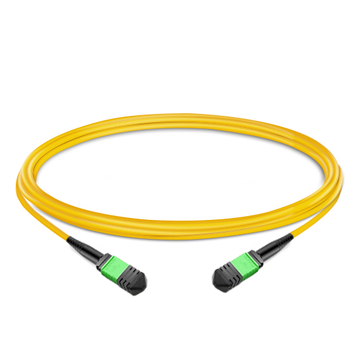
Polishing Types: Offered in either the APC (angled polished) or PC (physical contact), all in an effort to achieve low insertion loss and return loss.
Fiber types: Provides an interface for OM3, OM4, and OS2 fibers, which are used for both multi-mode and single-mode.
Insertion loss: It is most preferred to be between 0.25 dB and 0.75dB, depending on the kind of fiber and the number of connectors.
Return loss: The APC connectors provide a return loss greater than -60 dB, whereas the single-mode PC connectors should offer a return loss of above -20 dB in some applications.
Polarity Mechanisms: Various types of polarity are available for Type A, B, and C polarities to eliminate wrong signal transmission in such complex networks.
Lifetime: The minimum number of mating cycles most MPO connectors can withstand ranges from 500 to 1,000 cycles.
Due to the above specifications, MPO cables are an essential requirement of all high-speed data centers and telecommunication systems in terms of effectiveness, dependability, and expansiveness of the networks.
Overview of MPO Cable Assemblies
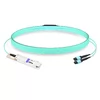
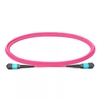
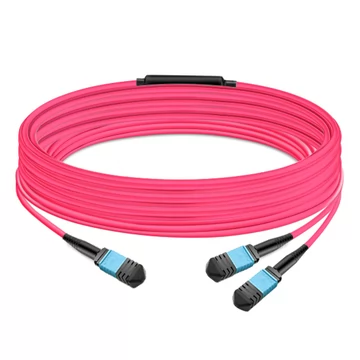
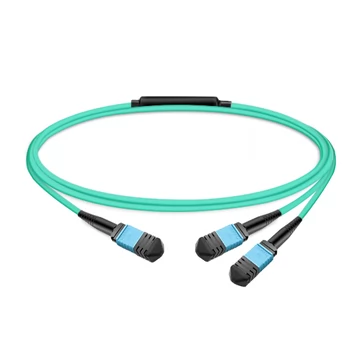
The MPO (multi-fiber push-on) cable assemblies are fiber optic cabling systems prepared and tested at a specific location for the purpose of deployment in high-capacity network environments. Their specialty lies in using MPO connectors that allow the connection of multiple fibers at the same time, usually 8, 12, or 24 fibers per connector, hence making installation less time-consuming while using the traditional field termination methods. The worthy replacement for the will of brisk communication in fashion can exude “la, la, la, 40G, or 100G, or 400G” networks.
Among the main components of MPO cables assembly are the cables themselves, which are usually made of ribbon or micro-core constructs of fibers, and also the appropriate MPO connectors, which align the cables properly and ensure good quality signals. Such assemblies are tested in factories to monitor parameters such as low insertion loss or high return loss, to ascertain the highest quality of work possible for high bandwidth requirements. Single-mode and multi-mode fibers are available with stipulations of polarity offered on demand to suit certain systems where necessary.
Benefits of Using MPO Cables
Dense Connections: MPO cabling is an effective way of connecting a number of fibers within a single compact bundle, and is especially useful in space-constrained locations such as data centers.
Supporting Expansion: Modular upgradeability provides users the convenience of moving to faster speeds, such as 40G or 100G, and also facilitates the scaling of operations with minimal interruptions.
Simplified Assemble: MPO pigtails assemblies provide time saving in the installation as they are plug and play as opposed to traditional methods of field terminations.
Economical Analysis: Since a cable can carry numerous fibers within it, MPO technology helps cut down on the usage of materials and labor, hence reducing costs for the project.
Adherence to Standards: Certain well-known standards (e.g., TIA/EIA-568, IEC-61754�7) are followed by mpo cables so that they are backward compatible with every system, and this provides efficiency.
Optimized Network Performance: In today’s high-speed applications, mpo cable assemblies are excellent because they offer low insertion loss and good signal integrity characteristics.
These benefits have made MPO cabled solutions dominate the fiber optic infrastructures with scaling, loss, and achieving highly efficient solutions, and providing long-lasting yet cost-effective solutions.
Improved Performance for 10G and 100G Applications
Today's networking world calls for specialized solutions and especially MPO-Cables, proving to be of considerable importance in 10G and 100G environments. These networks require the integration of highly dense fibers, which in turn facilitate data flow with very low delay. The MPO cables involve intricate designs that are successful in the alignment of the fibers, which is important as the data rates increase.
The MPO systems for 10G installations ease the transition from 10G to 40G and 100G networks since they have modular designs. For 100G uses, the MPO systems employ the use of parallel optics that distribute the data over several fiber channels in order to increase efficiency and eliminate the excess burden. MPO systems also have high TP and global dimensions, taking up space, allowing designs with low bulky implications for insertion, and extreme bandwidth use for optimum operation of today’s network, which has high requirements for data.
MPO cables take advantage of breakthrough technologies enabling efficient operation with exceptional dependability at present and into the future.
Common Use Cases for MPO Fiber Cables
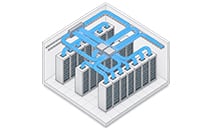
Data Centers employ MPO fiber cables, which are basic components used to organize high-density cabling as a support for high data rates between servers, switchers, and storage.
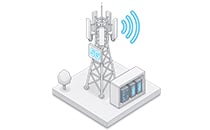
Telecom: The role of these components is also associated with telecommunications infrastructure that allows connection at high speed and large network expansion.
Cloud Computing: Cloud service providers, transmitting enormous amounts of data, rely on mpo cables for efficient and reliable high-bandwidth connections.
HPC: Such cables are used as media access systems allow quick data transfer required by appropriate hardware for research and development purposes.
Media Broadcasting: MPO Cables can also be extended in media production and broadcasting, where there is a need for easy data flow for high-quality videos and audio content handling.
Utilization in High-Bandwidth Networks
High-capacity networks are essential in making sure that modern datacenters operate perfectly since the workload is expected to increase exponentially, hence the demand for data transmission that is ultralow in latency, and very fast is also expected to grow. Different processes, such as automation and artificial intelligence – assisted network enhancement, have also been promoted in order to take care of data-intensive traffic flows, and the order of the network is maintained. By being able to adjust bandwidth priorities to certain applications, when necessary, they help some mission-critical functions perform actively. Edge computing infrastructure by itself enhances the effect of networks and lessens delay by enabling data processing at points closer to its origins.
Selection Criteria for MPO Cables
When you are looking to choose MPO (Multi-Fiber Push-On) cables, remember to take into consideration the following factors:
Fiber Count and Type: Calculate the required number of fibers (e.g., 12, 24, and so on) for the application. Select fibers between single-mode and multimode fibers based on the distance and bandwidth requirements.
Connector Type: Ensure that the connector type (e.g., male or female with pin alignment) to be used matches the equipment and the application.
Polarity: Confirm the polarity type (either Type A, B, or C) to ensure proper signal transmission and avoid the problem of devices not being connected.
Insertion Loss: Avoid loss of signals and ensure good performance, especially in high-speed networks, by choosing cables with minimum insertion loss.
Compliance and Standards: Check the applicable industry standards for the MPO cables, TIA/EIA, or ISO/IEC, for example, in terms of compliance and compatibility.
Evaluating all these parameters, end users have the advantage of ensuring that the MPO cables they go for are best suited to address the selected network and data communication purposes.
Choosing the Right MPO Cable Assembly
If one intends to choose the ideal cable with an MPO connector, the consideration of novel technologies and trends in the industry that may develop in the future is absolutely imperative. In the current scenario of technology, MPO connectors are fueling the expansion of high-capacity networks, particularly because many organizations are upgrading to 40G, 100G, and subsequently 400G networks. Over the years, the optical communications industry has gravitated towards the use of single-mode MPO connectors, especially where long galloping mileages and high bandwidths are needed, because they have some of the lowest loss per interface, with a maximum of between 0.35dB and a minimum of 0.75dB.
In addition, fiber type is equally essential, for example, OM4 multimode fiber being widely used for short-range data centers, as it can support up to 100Gbps data rate for almost 150m distance transmission. 12-fiber or 24-fiber MPO cables are increasingly being used in networks with higher density and convenience management requirements, and 16-fiber MPO cables will now be commonly used for 400G Ethernet and other similar networks in the near future.
Frequently Asked Questions (FAQs)
What are MPO cables, and how do they serve modern networks?
Usually, multi-fiber push-on optical cables, which are also referred to as MPO cables, are known to have a very high density because they tend to keep many optical fibers in one single connector. This allows less cabling and quick installation. The importance of these devices is that almost all modern networks require high-speed data transmission and low latency for bandwidth-hungry applications.
What is the significance of the use of LSZH in MPO cables?
The MPO cables contain LSZH (low smoke zero halogen) material, which is used as cladding in order to eliminate the toxic smoke and fumes released during a fire. Not only does this mitigation secure and conform to strict fire safety standards, but it also creates a healthier atmosphere in areas such as data centers.
Why is the thorough assessment of MPO cable assemblies essential?
Determining the ideal MPO cable assembly requires consideration of aspects such as the scope of work, network expansion capabilities, and standardization. These considerations should complement the usage expectations to guarantee performance and availability of service without sacrificing the horizons of technology.