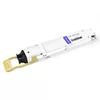
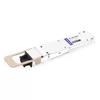
Understanding 800G OSFP Liquid Cooling Technology
What is 800G OSFP?
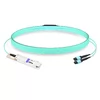
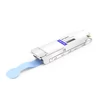
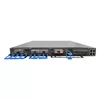
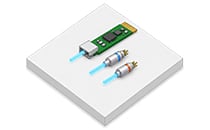
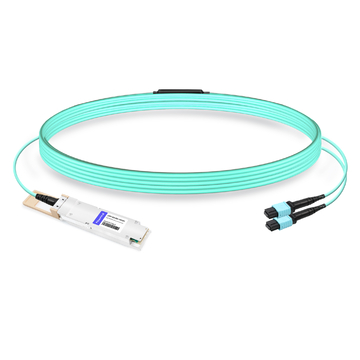
The 800G OSFP, also known as the Octal Small Form-factor Pluggable, is an optical transceiver technology built to enable high data rate transfer with a speed of 800 Gbps. The main objective of the technology is to solve the problem of increased data transmission rates in data centers and telecom networks within dense environments. This version appears with eight lanes, each operating at 100 Gbps, and enables bandwidth evolution in modern networks. Moreover, it is power efficient and also allows upscaling with time, which is quite essential.
Primary Characteristics of 800G OSFP Transceivers
1. Maximum Speed: the capacity of reaching hundreds of gigabits per second (Gbps), which is up to 800 Gbps, makes contemporary data centres much easier to use.
2. Latency: It is designed and manufactured with attention to latency-sensitive applications expected to become more common in the future.
3. Power Usage Efficiency: Very little energy use was considered in some aspects of the design for low power consumption without performance loss.
4. Scalable Architectures: This is fully compatible with large-scale architectures composed of multiple processes to enable organizations such as cloud providers to adjust to increasing capacity requirements.
5. Heat Management: They leverage efficient heat removal thanks to the placement of some integrable elements in coolants, lowering dependence on cooled environments for reliable and cost-effective usage.
6. Port Density: By virtue of the OSFP design’s high port capacity, effective utilization of available network device space is achieved.
7. Compatibility: There are no compliance issues with the current network infrastructure, as this device meets the necessary standards.
Comparison with Other Form Factors
To begin with, let us compare the 800G OSFP transceivers with other optical connectors like QSFP-DD and CFP8. There are several advantages and comparisons to be made here. The OSFP (Octal Small Form Factor Pluggable) transceiver, although it supports higher bandwidth, works great for future applications that would require an 800G Ethernet. Unlike the QSFP-DD, which supports up to 400G, the OSFP is a module explicitly meant to support 800G, avoiding any ceiling problems that may occur in data center environments due to traffic being too immense.
The second major difference is thermal performance. In general, OSFP transceivers possess a more efficient cooling design, leading to better heat handling than a lot of CFP8 models, as some of these modules become hot as data throughput increases. In addition, OSFP supports a higher port density as compared to CFP form-factors because of its small size, which makes it possible to integrate the ports more compactly on the available rack space in vast environments of racks.
Liquid Cooling Solutions for Optical Transceivers
The Significance of Liquid Cooling in Dense Applications
With the surge of interest in high-performance data centers brought about by AI, IoT, and cloud, demand for cooling systems that efficiently manage the generated heat is also increasing. In high-density setups, it is often challenging for conventional air-based cooling systems to efficiently take away the heat, which results in performance restriction, an increase in power usage, and, in some cases, failure of the hardware. Liquid cooling systems are part of the resolution to such kinds of issues.
Liquid Cooling Technologies: Immersion vs. Conventional
The first one is the immersion method, and the second one is the conventional method. In the first method, servers or other hardware are placed in a coolant, which eliminates heat and cuts down the need for fans or air conditioners. In the cooling solution considered, such activities are avoided; thus, less energy is consumed for cooling down the system. The conventional method is related to the moving flow of the coolant along the inside pipes connecting the heat exchangers attached to the hot devices, and the heat from these devices' hot surfaces is carried to the given sources where it has been extracted.
Benefits of Liquid Cooling Optical Transceivers
Liquid cooling technology for optical transceivers provides a lot of benefits that make sense as the needs of all data centers change. Liquid cooling technology, by virtue of its efficient system of removing heat, helps to improve significantly the performance of optical transceivers and their reliability, thus keeping them running in all conditions. It does not allow the optics to overheat and cause high temperatures, which leads to signal loss – or destruction of components, which is a factor that increases the service life of the equipment. Moreover, these systems tend to consume less power than their air-cooled counterparts, which helps reduce running costs with enhanced features of energy use in an eco-friendly data centre. Also, the compact and efficient nature of liquid cooling systems allows for higher spatial density in data centers, allowing more space to be used without degrading performance.
Deep Dive into 800G OSFP Liquid Cooling
How Liquid Cooling Elevates the 800G OSFP Performance Levels
Conventional air-cooling systems are no longer applicable due to the increase in the power density within these modules, thus creating a great need for an alternative heat removal mechanism. It is now much easier to tackle this thermal problem with the use of liquid, as it has a high ability to remove heat from the components much faster than air. This helps the modules operate without any alteration, even if they are subjected to heavy loads for long periods.
Difficulties Encountered in the Application of Liquid Cooling Practices
Although the benefits of liquid cooling in any contemporary data center technology far outweigh the demerits, there are challenges that inhibit its application. One of the major hurdles is the initial financial cost that comes with the liquid cooling facilities. The building of special piping or pump systems plus heat exchange devices can be quite a challenge in terms of finance, especially for smaller data centers or organizations with tight budgets.
Another major issue is maintenance. Liquid cooling systems require a high degree of maintenance to avoid such problems as leakages, contamination or corrosion that may interfere with the processes and cause delays.
Evolving Aspects of Liquid Cooling Systems
In the near future, the liquid cooling technology focuses on three main factors that will change the modern data centers further: efficiency, environmental friendliness, and flexibility. Some of these changes have already been investigated and implemented, including, for example, the possibility of immersion cooling server components by completely submerging servers in specific non-conductive liquids within tanks, allowing better heat management and reduced energy consumption. The next stage adds another dimension to the liquid cooling advancement by introducing green solutions with bio-degradable or recyclable coolants.
Applications of 800G OSFP Liquid Cooling
Applications Within the Data Centers
With the advent of high-performance computing, the implementation of 800G OSFP liquid cooling within data centers has gained prominence. The target industry is very narrow and this technology has been beneficial for use within dense server arrangements with which air cooling systems are often inadequate. In this way, liquid cooling helps data centers achieve both a significant reduction in energy consumption and operational costs and achieve denser designs with higher allowable power dissipation.
The Effect on Ethernet and Networking Technologies
When considering the impact of advanced cooling technologies, including liquid cooling, one should review Ethernet and networking infrastructures. In this current trend, where data centers are focusing more on performance, there has been a tremendous increase in the requirement for ultra-fast and less latent networking solutions. It is indeed true that the use of liquid cooling allows for greater densities in the servers which allows the hardware to work at full efficiency without thermal throttling. Such enhancement, therefore, increases the amount of data which the Ethernet and networking technologies are able to transmit and such necessity underpins the development of such high-speed Ethernet standards as 400GbE and even higher speeds.
800G OSFPs' Deployment in Optical Networks
To cater to the increasing need for high throughput and low-latency networks in present-day DC environments, 800G OSFP (Octal Small Form-factor Pluggable) Transceivers are expected to be the future of tomorrow’s optics. Today’s search-based insights reveal that more and more companies are interested in deploying 800G OSFP and similar optical modules to enhance their network’s capacity and effectiveness. Such optical modules improve density and reduce power dependency, handling even such vital processes as artificial intelligence, machine learning, or big data processing in real-time.
Technical Considerations and Best Practices
Designing 800G OSFP and Liquid Cooled Systems
During the design of systems incorporating 800G OSFP modules and employing liquid cooling systems, design engineers must consider several scenarios for the system to be efficient and operate well. The 800G OSFPs, which provide a very fast rate of data transfer, and the liquid cooling, which is the best known method of heat removal, address the issues in modern powerful computers and networks.
As one insightful observer noted, water cooling significantly alleviates the heat problem, and computer systems can exert a heavy load without abnormal operations caused by the heat. This minimises the necessity for thermal management, which is unavoidable for the 800G OSFP devices at ultra-speed.
Immersion Cooling for Better Performance
In what way does immersion cooling guarantee steady effectiveness over a period of time? It achieves this by removing areas of high concentration of heat and allowing the whole component to operate at the same temperature throughout, hence preventing the components from suffering thermal stress. Enhanced heat distribution and more sound application of cooler walls will reduce wear and tear on variable structural components, directing factors into their mission's objectives without the threat of economic impact, low material failure rates, and a clear turnaround time.
Choosing An Appropriate Pigtail And Accessories
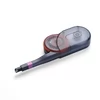
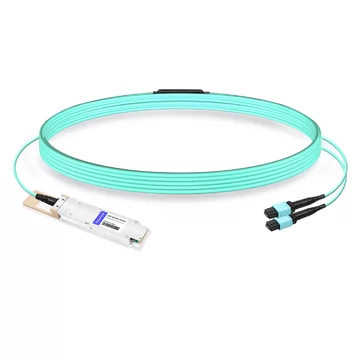
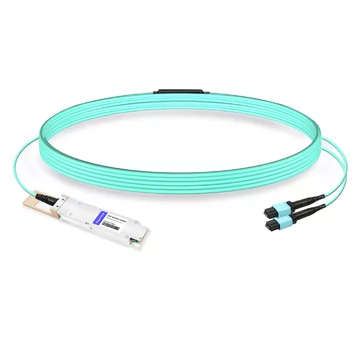
It is important to give attention to choosing appropriate pigtails and their accessories in order to enhance network infrastructure performance. A pigtail, being a short optical fiber cable which has a connector pre-installed on one side, should meet your specific needs in a particular application. You should take into account factors like the type of fiber, type of connector, the surroundings in which the cable will operate, and decide accordingly. There is no point in using a single mode when you are trying to send data across a short distance – the correct fiber for that purpose is multimode fiber.
FAQs
What is the primary benefit of liquid cooling for 800G OSFP transceivers?
The provision of cooling of this type enhances the performance of 800G OSFP transceivers in terms of thermal dispersion in high-power high-density data center applications. Liquid cooling, as opposed to air cooling, is more efficient in handling the heat generated through 800G operations, thereby allowing transceivers to be in safe and recommended temperatures always.
In terms of 800G OSFP modules, how does immersion cooling differ from conventional liquid cooling techniques?
Within immersion cooling systems, the 800G OSFP module itself, together with all other hardware such as transceivers, is plunged into a dielectric fluid and this results in equal direct cooling on all sides of the hardware. Meanwhile, those heat pipes operating cold plates/heat sinks are attached only to the hot area sources, which is effective to a limited extent and these, in turn, are a part of traditional liquid cooling methods as opposed to submerged cooling.
What do you think are the main obstacles to 800G OSFP liquid cooling?
Putting in place 800G OSFP liquid cooling solutions has many technical challenges. First, significant levels of investment will have to be met before getting down to the drawing board to specify cold plates, powerful pumps, manifolds, and leak detection apparatus which are all critical in controlling the apparatus.