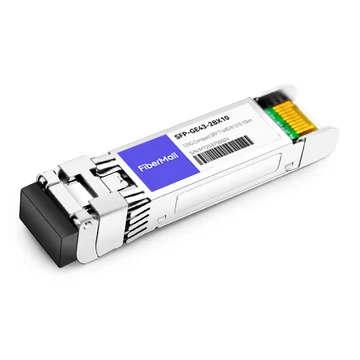
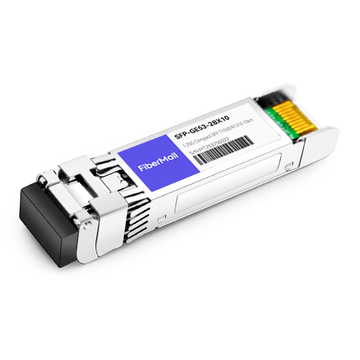
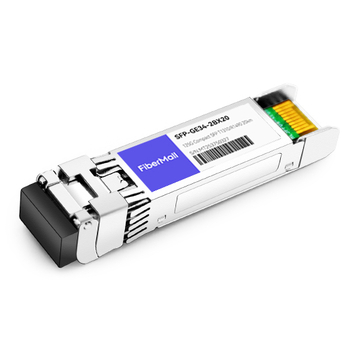
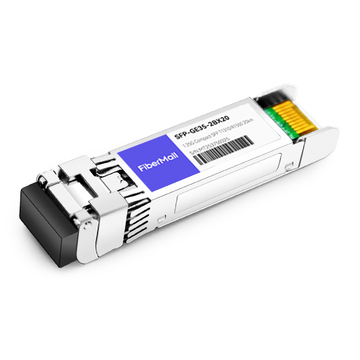
CSFP Transceiver Module
In recent years, a new paradigm has been introduced into the field of optical communications: the compact small form-factor pluggable (CSFP) transceiver module. It optimizes network resources and facilitates network expansion by enabling a structured layout of high-performance devices with minimal space and power consumption.
What is a CSFP Transceiver Module?
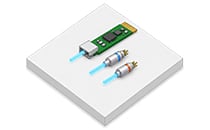
CSFP (Compact Small Form-factor Pluggable) transceivers are high-integration optical modules designed for single-fiber bidirectional transmission. CSFP modules support two independent channels in the same physical size as a standard SFP, thereby doubling port density. This advantage is especially valuable in high-density applications such as metropolitan area networks (MANs), Fiber to the Home (FTTH), and other space-constrained networking environments.
Definition and technical overview
The core purpose of Compact Small Form-factor Pluggable (CSFP) modules is to deliver optical transceiver solutions for systems that demand high port density and low insertion loss in fiber-optic communications. CSFP modules enable bidirectional transmission on a single fiber per channel using WDM technology, with dedicated wavelengths for transmit and receive directions. They comply with the industry CSFP MSA standard and typically support data rates up to 1.25 Gbps per channel, while maintaining the same form factor as standard SFP modules. CSFP transceivers are preferred in space- and power-constrained optical networks where reliability, low power consumption, and high density are essential.
CSFP Transceiver Modules vs. SFP Transceivers
The primary difference between CSFP and SFP transceivers lies in channel capacity and efficiency. Unlike standard single-channel SFP modules, CSFP modules provide dual-channel operation within the identical form factor. This allows two connections over a single pair of fibers, reducing fiber usage and simplifying network design. In contrast, an SFP transceiver handles only one channel and is suited for conventional single-mode or multi-mode fiber links without fiber or space constraints.
Detailed comparison of form factors and applications
Physical Dimensions
CSFP and SFP modules differ significantly in channel support and port utilization. Standard SFP modules are single-channel devices that occupy one port per connection. CSFP modules, however, deliver two independent channels within the same slot and aperture, effectively doubling port density. This compact, dual-channel design makes CSFP ideal for environments with limited ports, such as densely populated metropolitan facilities.
Fiber Distribution and Performance
CSFP modules optimize fiber utilization by enabling two bidirectional channels over a pair of fibers. This approach reduces the number of fibers required and lowers deployment costs. SFP modules, by comparison, are best suited for applications with ample fiber availability where simplicity and cost-effectiveness are prioritized.
Exemplary Application Cases
CSFP transceivers are widely adopted in metropolitan Ethernet and access networks because they reduce operational costs without sacrificing performance. They use a single fiber strand per channel for bidirectional transmission, making them ideal for fiber-scarce installations. SFP transceivers remain the choice for enterprise networks, data centers, and general applications that require broad compatibility and straightforward scalability.
The relationship between Performance and Scalability
CSFP modules offer clear advantages in compactness and fiber efficiency, though they require network equipment capable of supporting dual channels. SFP modules are simpler and more universally compatible, making them preferable in networks without strict fiber or space limitations.
Applications of CSFP Transceiver Modules in Networking
CSFP transceivers excel in scenarios where fiber optimization is critical. They deliver efficient resource utilization in high-density systems such as metropolitan area networks (MANs) with scarce fiber resources, enabling higher data transmission density. They are also used in telecom systems, mobile backhaul, and FTTx (Fiber to the x) access networks to support rapid service growth.
Use cases in telecommunications, data centers, and enterprise networks
Telecommunications
CSFP modules are installed in SFP-compatible telecommunications equipment to enable high-speed, long- and short-haul data communication. They are extensively deployed in metropolitan area networks and metro Ethernet wireless backhaul, where wavelength-division multiplexing (WDM) further minimizes fiber usage while maintaining signal integrity.
Data Centers
SFP and CSFP modules facilitate high-speed interconnects between servers, routers, and storage systems, supporting data rates from 1 Gbps to 100 Gbps. They help reduce latency and enable network virtualization for growing workloads.
Enterprise Networks
In large-scale LAN and WAN deployments, these modules provide cost-effective and reliable connectivity across multiple protocols. CSFP transceivers are particularly beneficial when additional bandwidth is needed without expanding physical infrastructure, supporting services such as video conferencing, VoIP, and ERP systems.
How CSFP Transceiver Modules Work
Compact Small Form-factor Pluggable (CSFP) transceivers transmit and receive optical signals bidirectionally on a single fiber link using WDM technology. Each channel employs two distinct wavelengths—one for transmission and one for reception—allowing one fiber to carry traffic in both directions. This design doubles fiber utilization, providing a compact, scalable solution for enterprise and telecommunications networks.
Explanation of bidirectional data transmission
Bidirectional transmission uses dedicated wavelengths within the same fiber for simultaneous send and receive operations. WDM technology eliminates the need for additional cables, maximizing the capacity of existing fiber infrastructure. The separation of wavelengths also improves signal isolation and transmission reliability, making the solution ideal for high-performance enterprise and carrier networks.
Key Considerations When Choosing a CSFP Transceiver Module
When selecting a CSFP transceiver, key factors include network compatibility, transmission distance, and data rate requirements. The module must comply with MSA standards to ensure interoperability. Wavelength, fiber type (single-mode or multi-mode), power consumption, and thermal performance should also be verified. Finally, choosing a reputable supplier helps guarantee long-term network stability.
Factors such as compatibility, speed ratings, wavelength, and connector types
Compatibility with existing hardware and software is essential to avoid operational issues. Speed ratings must match network requirements to prevent bottlenecks. Wavelength selection must align with the required distance and fiber type for optimal signal quality. Appropriate connector types ensure secure physical connections and reliable network performance.
Frequently Asked Questions (FAQs)
Please explain the purpose of a CSFP transceiver module.
A CSFP (Compact Small Form-factor Pluggable) optical transceiver is a compact, hot-pluggable device that integrates transmit and receive functions for two independent channels on single fibers. It allows operators to double port density without increasing equipment size.
How are CSFP transceiver modules employed in practice?
CSFP modules are primarily used in metro communication networks, cellular base stations, Fiber to the Home (FTTH), and high-density clustering environments. They maximize port count and fiber efficiency in traffic-heavy, cost-sensitive deployments.
What is the contribution of the CSFP Transceiver to the efficiency of a network?
The CSFP module transmits and receives data bidirectionally on a single fiber using separate wavelengths for each direction. By providing two channels per module, it reduces fiber consumption, simplifies expansion, and lowers infrastructure costs.