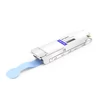
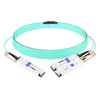
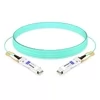
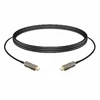
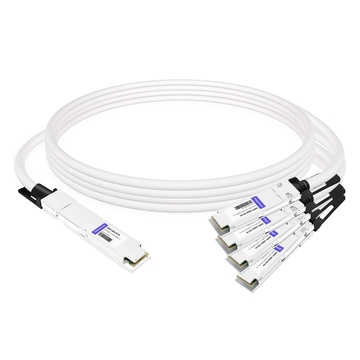
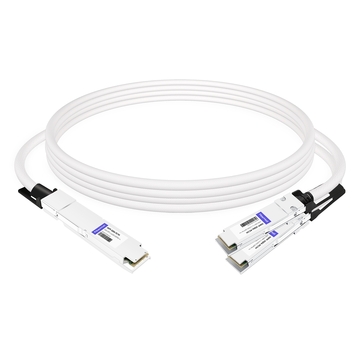
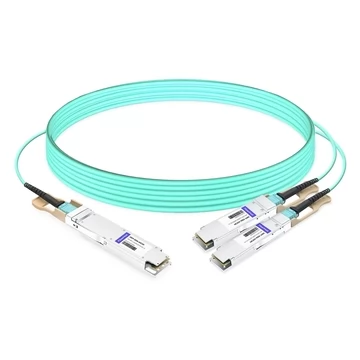
Introduction to 400g NDR InfiniBand
What is InfiniBand?
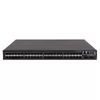
InfiniBand serves as a fast networking solution which data centers and HPC clusters and enterprise systems use for their networking needs. The system uses a switched fabric design which provides extremely fast data transmission and high data transfer rates that suit AI and cloud computing and scientific research activities. The new 400G NDR InfiniBand technology reaches data transfer rates of 400Gbps to solve increasing data system complexity challenges.
Overview of 400g Technology
The introduction of 400g technology establishes a fundamental advancement which enhances networking and data transfer capabilities while meeting the increasing requirements of data-intensive applications such as artificial intelligence high-performance computing and big data analytics. The research findings together with the search patterns show that industries now depend on ultra-fast low-latency networks to handle their rapidly expanding digital data requirements.
The Role of NDR in InfiniBand
NDR (or Next Data Rate) establishes a critical foundation which enables InfiniBand to achieve its full potential as a high-performance network communication standard for data centers and high-performance computing environments. The rising need for higher data transmission speeds and lower latency has enabled NDR technology to deliver record-breaking InfiniBand link speeds of 400 Gbps, representing double the capacity of earlier versions. The new capabilities enable organizations to manage demanding workloads which include AI training and simulation and machine learning activities.
Key Components of 400g NDR InfiniBand
NVIDIA ConnectX-7 Overview
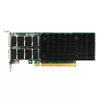
NVIDIA ConnectX-7 serves as an advanced Network Interface Card (NIC) which provides exceptional performance capability for high-speed networking and data transmission needs. The ConnectX-7 network solution supports 400G HDR and NDR InfiniBand because it needs to fulfill the requirements of applications which demand extremely fast response times and high data transmission capabilities for artificial intelligence and cloud computing and modern data center operations.
Transceivers: Types and Functions
Modern networks rely on transceivers as essential elements which establish data flow between high-speed fiber optic and Ethernet links. The different transceiver types fulfill specific requirements which different network environments need. The three main transceiver types SFP (Small Form-Factor Pluggable) QSFP (Quad Small Form-Factor Pluggable) and CFP (C Form-Factor Pluggable) provide different capabilities which allow users to handle various data rates and distances and system capacity. SFP modules serve as the standard solution for short to medium-length connections while QSFP modules handle high data rate applications which need 100G or 400G network capabilities.
Understanding 400g QSFP112 and OSFP
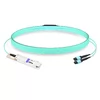
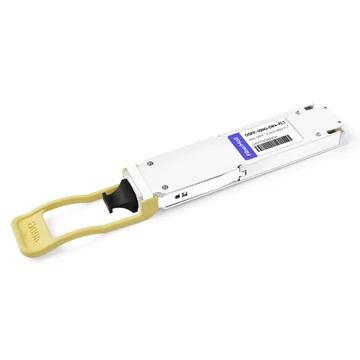
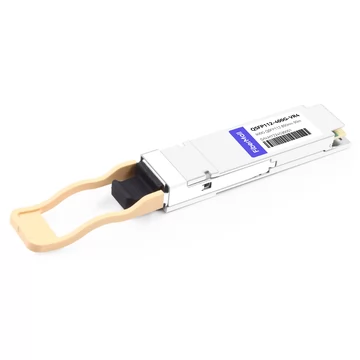
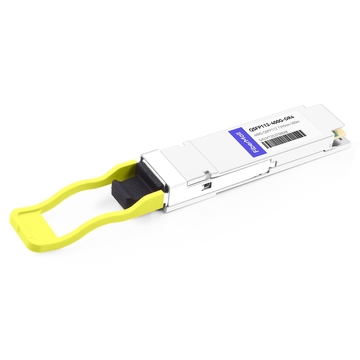
The 400G QSFP112 and OSFP are advanced pluggable transceivers designed to meet the demands of next-generation data center and networking environments. The QSFP112 compact form factor contains 4x112 Gbps PAM4 lanes which produce an overall data output of 400 Gbps. Its power efficiency and support for different optical and copper connections make it the preferred choice in the market.
The OSFP (Octal Small Form Factor Pluggable) transceiver form factor provides advanced power handling and thermal management capabilities which support 400G and 800G system deployments. OSFP modules support high power usage which provides extended operational reach and efficiency for large-scale use.
Technical Specifications and Standards
Data Rates and Bandwidth
The QSFP112 and OSFP transceivers deliver exceptional data rates because they provide bandwidth capacity which supports data transmission at 112 Gbps per channel. The system achieves this performance through PAM4 (Pulse Amplitude Modulation) signaling which doubles the existing NRZ (Non-Return-to-Zero) technology throughput. The transceivers support total data rates of 400 Gbps through QSFP112 modules while they deliver 800 Gbps through OSFP modules, which makes them essential for modern network infrastructure requirements.
Cable Types: SMF vs. OM4
The decision between Single-Mode Fiber and OM4 Multimode Fiber requires network operators to evaluate their specific network needs and their application environment requirements. The design of SMF enables long-distance transmission which reaches distances beyond 10 kilometers while using a core diameter of 9 microns. The system transmits data across long distances without losing signals which makes it suitable for high-speed backbone networks and data centers.
The high-performance multimode fiber OM4 operates at short-range distances because it uses a 50-micron core diameter to transmit data at 40 Gbps and 100 Gbps speeds across distances up to 550 meters. OM4 offers a more affordable solution for data center environments which require short-term connections because its transceivers and infrastructure components cost less than SMF systems.
Optical Transceiver Modules Explained
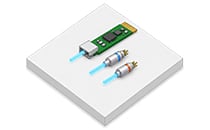
The modern fiber optic communication systems use optical transceiver modules as key components which enable data transmission and reception through optical fiber networks. The modules enable high-speed data transfer through their ability to convert electrical signals into optical signals and back again with low latency. The transceiver module family includes SFP, SFP+, QSFP+ and QSFP28 which provide different network solutions that match various speed requirements and distance limitations and network configurations. The SFP and SFP+ modules support applications which need speeds up to 10 Gbps while the QSFP28 modules enable data centers and backbone networks to achieve speeds beyond 100 Gbps.
Implementing 400g NDR InfiniBand in Data Centers
Designing a High-Speed Data Center Network
The process of designing a high-speed data center network requires engineers to create a system which provides maximum performance through its capacity to expand while operating at peak efficiency. Architects need to select networking solutions for their project which requires 400G NDR InfiniBand solutions that provide extremely low latency and high bandwidth performance needed for AI and machine learning applications. Data centers can improve their data transfer speeds and their resource management capabilities through the use of cutting-edge optical transceivers.
Choosing the Right InfiniBand Adapter
The selection of the appropriate InfiniBand adapter functions as the fundamental element which enables data center operations to achieve peak performance while fulfilling workload demands. The adapter selection process requires evaluation of multiple elements which include both bandwidth and latency and compatibility and scalability. High-performance adapters which use HDR (High Data Rate) and NDR (Next Data Rate) technologies deliver optimal performance for environments that demand instant response times and massive data processing capabilities needed in AI and machine learning and big data fields.
Best Practices for Cable Management
The organization and performance of IT systems depend on proper cable management which creates an environment that supports safe operations. The following best practices show current industry standards and emerging trends.
1.Label All Cables
Labeling each cable with clear identification information shows its intended use and its specific connection point which helps technicians to troubleshoot and system reconfiguration tasks faster.
2.Plan for Scalability
Your cable layout design should include provisions for upcoming growth requirements while structured cabling systems should enable expansion through structured approaches that prevent material clutter.
3.Maintain Proper Cable Lengths
The use of excessive cable lengths should be avoided because it creates both physical clutter and signal quality problems. The best practice requires users to measure their needs and create their own custom-length cables.
4.Bundle Cables Based on Functionality
Cables should be organized into three main groups which include power cables and network cables and peripheral connections. This segmentation reduces electromagnetic interference and simplifies maintenance.
5.Follow Industry Standards for Data Centers
The organization needs to implement TIA/EIA standards for cable management because this approach will help them achieve regulatory compliance while improving their operational efficiency.
6.Regularly Inspect and Update
The organization needs to establish a system for periodic cable inspections which will include identification of damaged cables and their subsequent replacement along with system updates that will require new label creation.
Performance and Use Cases
Benchmarking 400g InfiniBand
The 400g InfiniBand system outperforms 200g InfiniBand and all earlier technological systems because it offers better performance through its advanced bandwidth and operational efficiency. The system demonstrates excellent competition with Ethernet systems particularly in its ability to handle latency-critical applications which include both clustering and computational processes. The essential role of 400g InfiniBand for future data center construction exists through its combination of essential capabilities which drive business progress across multiple industries.
Applications in High-Performance Computing
High-performance computing needs 400g InfiniBand because this technology provides two essential benefits which include extremely fast speeds and consistent operational capacity. The equipment was developed to meet the heavy processing needs of high-performance computing work which includes weather simulations and genomic studies and artificial intelligence training. The system can process advanced mathematical problems more quickly because it has improved data transmission capabilities and reduced latency times. Organizations can develop dynamic systems through 400g InfiniBand and cloud computing services to meet their growing requirements for rapid data transmission.
Case Studies of Successful Implementations
- ●Healthcare Innovation with 400g InfiniBand
One significant demonstration of 400g InfiniBand's benefits occurs through its application in genomic research which supports medical progress. The technology enables organizations to speed up their data processing which results in quicker drug development and personalized medicine research.
- ●Automotive Advancements in Autonomous Vehicles
The automotive sector depends on 400g InfiniBand technology to create artificial intelligence systems which drive self-driving cars. The technology enables companies to achieve training time reductions because it delivers data with unmatched speed and minimal delay through their cloud-based simulation systems.
- ●Financial Modeling at Scale
Financial organizations utilize 400g InfiniBand technology to conduct extensive predictive modeling operations and risk evaluation processes. A recent case study demonstrated how a leading investment firm used the technology to enhance its high-performance computing systems, which resulted in faster execution of complex portfolio simulations.
Future Trends in 400g NDR InfiniBand Technology
Emerging Technologies and Innovations
The research reveals vital emerging trends and technological developments through its examination of 400g NDR InfiniBand technology together with current search engine data. These include the integration of artificial intelligence (AI) and machine learning (ML) workloads, which demand unparalleled data throughput and ultra-low latency. The 400g InfiniBand system enables industries to enhance their performance across essential sectors which include high-performance computing (HPC) and cloud infrastructure and data analytics. The development of adaptive routing and congestion control and in-network computing creates solutions which interconnect systems require to achieve scalable performance with efficient operations and reliable service.
The Shift Towards 800g InfiniBand
The introduction of 800g InfiniBand creates an important advancement in high-performance networking because industries need higher bandwidth and shorter latency times to manage their rapidly increasing data requirements. The current technological advancements in AI and machine learning and cloud computing have created a need for interconnect solutions that can handle the rising data volume of current workload demands. The new 800g InfiniBand system doubles its previous data transmission rate while adding advanced capabilities that enable smart data handling and improved processing efficiency.
Market Outlook and Predictions
The adoption of 800g InfiniBand is expected to increase quickly during the next few years because high-performance computing and cloud infrastructure usage continues to grow. The current search trends data shows that people now display increased interest in high-speed networking technologies because the market demands better connectivity solutions. Industry analysts predict that artificial intelligence and data analytics and scientific research fields will drive demand because these fields need advanced data transfer speeds and minimal delay times.
FAQ
Frequently Asked Questions (FAQ) about 400G NDR InfiniBand
What is 400G NDR InfiniBand?
The 400G NDR InfiniBand networking technology delivers data rates of 400 gigabits per second which makes it suitable for high performance computing and artificial intelligence applications and large data center operations.
Who uses 400G NDR InfiniBand?
Network engineers and data center managers and cloud providers and research institutions require this technology for their needs of fast and dependable data transmission.
What are the advantages of 400G NDR InfiniBand?
The main advantages provide extremely high data transmission capacity and minimal operational delays and extensive system expansion possibilities and capacity to handle intensive modern IT operational demands.
Is 400G NDR InfiniBand compatible with existing networks?
The 400G NDR InfiniBand system enables data center components to function with present infrastructure while providing customers an easy pathway to transition between different InfiniBand system versions.
Why is 400G NDR important for AI and cloud computing?
The system delivers quick and expandable network connections which organizations need to establish their AI training clusters and multi-cloud systems and systems for instantaneous data processing.