


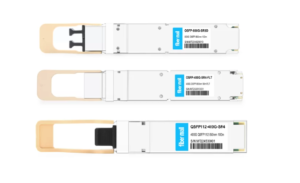
800G SR8 and 400G SR4 Optical Transceiver Modules Compatibility and Interconnection Test Report
Version Change Log Writer V0 Sample Test Cassie Test Purpose Test Objects:800G OSFP SR8/400G OSFP SR4/400G Q112 SR4. By conducting corresponding tests, the test parameters meet the relevant industry standards, and the test modules can be normally used for Nvidia (Mellanox) MQM9790 switch, Nvidia (Mellanox) ConnectX-7 network card and Nvidia (Mellanox) BlueField-3, laying a foundation for
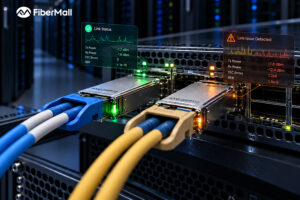
QSFP112 Troubleshooting Guide: Fix Link Down, Flaps and FEC Errors
Imagine an engineer named Priya troubleshooting a 400G QSFP112 port that suddenly went down at 2:10 a.m. The module appeared in the switch inventory, but the link indicator remained dark. After cleaning the MPO connector twice and replacing the patch cord, the link still would not come up. Further investigation
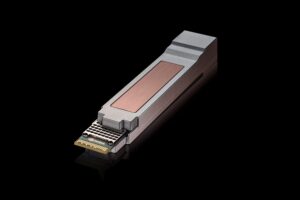
NVIDIA and Cisco Unveil USFP Optics — 400G per Lane and 12.8Tb/s for AI Factories
October 14, 2026 — NVIDIA and Cisco have announced Ultra-Dense Small Form Factor Pluggable (USFP), a new optical transceiver form factor designed as the first pluggable module to carry 400Gb/s-per-lane electrical signals. Compared with today’s 200Gb/s-per-lane pluggables, USFP delivers 4x the bandwidth and front-panel bandwidth density at roughly 1.3x the power efficiency, letting AI factory
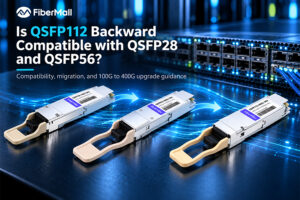
Is QSFP112 Backward Compatible with QSFP28 and QSFP56?
The short version up front, in case you’re mid-decision: QSFP112 backward compatibility works in the direction of the newer port, not the newer module. Can a QSFP112 transceiver work in an older QSFP28 switch? Can existing 100G QSFP28 or 200G QSFP56 modules be reused in newer QSFP112 ports? These questions
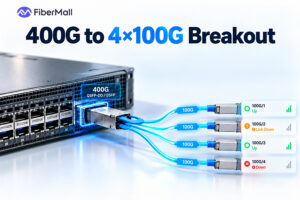
400G to 4×100G Breakout: Why Sub-Ports Stay Down — and How to Fix Them
You connect a 400G-to-4×100G breakout cable to a high-density Ethernet switch, configure the interfaces, and check the transceiver diagnostics. The optical power readings appear normal, yet only some of the four 100G sub-ports establish a link. Others remain down, while active links may report CRC errors or FEC-related faults. Although cable

400G Ethernet vs InfiniBand NDR: Which Fabric for AI?
Both 400G Ethernet and InfiniBand NDR deliver a nominal bandwidth of 400 Gb/s per port. However, identical port speeds do not guarantee identical performance in AI training clusters. The differences extend beyond raw bandwidth. InfiniBand uses native RDMA transport and credit-based link-level flow control, while 400G Ethernet typically relies on
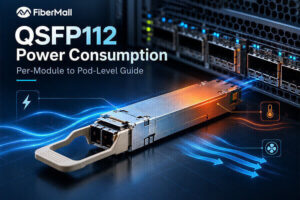
QSFP112 Power Consumption: Per-Module to Pod-Level Guide
Fill a 32-port 400G leaf switch with QSFP112 optics and the transceivers alone can draw roughly 256 to 384 watts with common 8–12 W modules. With higher-power long-reach optics approaching 13.5 W, the total can reach about 432 W. Nearly all of that electrical power ultimately becomes heat inside the