


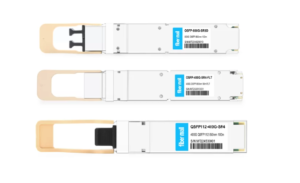
800G SR8 and 400G SR4 Optical Transceiver Modules Compatibility and Interconnection Test Report
Version Change Log Writer V0 Sample Test Cassie Test Purpose Test Objects:800G OSFP SR8/400G OSFP SR4/400G Q112 SR4. By conducting corresponding tests, the test parameters meet the relevant industry standards,

QSFP112 NVIDIA AI Clusters: ConnectX-7 and BlueField-3
You cannot directly install a QSFP112 transceiver into an NVIDIA Quantum-2 or Spectrum-4 switch port. These switch platforms use OSFP-based cages, while QSFP112 is designed primarily for NVIDIA adapter-side and

FiberMall Analyzes the UPO NPO Framework for 224G and 6.4T Optical Interconnect
The 2026 Open Data Center Conference (ODCC) and the inaugural Compute Expo provided a clearer view of how optical interconnect architectures may evolve inside AI data centers as electrical interconnect

GPT-6 Astra: How Many Optical Transceivers Did Its 100,000-GPU Training Run Actually Need?
OpenAI’s largest training run to date used more than 100,000 GPUs at its Stargate infrastructure in Texas. Everyone is benchmarking GPT-6 Astra. Far fewer people are asking what kind of

OSFP vs XPO: How Liquid-Cooled XPO Modules Address the Density Challenge in AI Data Centers
Introduction: Why AI Networks Need a New Optical Form Factor For more than a decade, the evolution of data center optical interconnects has followed a simple principle: increase bandwidth while
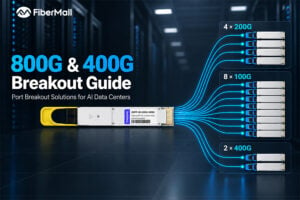
800G & 400G Breakout Guide: Port Breakout Solutions for AI Data Centers
What happens when your AI data center switches have already moved to 400G or 800G, while a large number of servers, NICs, DPUs, and existing network devices still operate at

What Is a Coherent DSP? The Engine Inside Optical Transceivers
Priya runs the network operations center for a regional telecom operator. Last quarter her team deployed 400G ZR QSFP-DD modules between two data centers 95 km apart. Both link LEDs