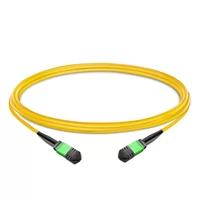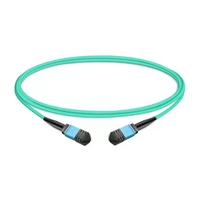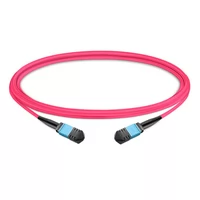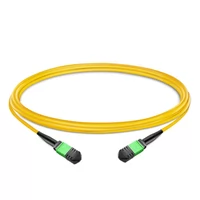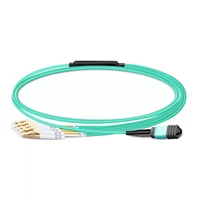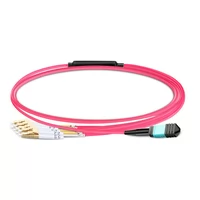

The quick spread of data-heavy programs has resulted in a need for fast, adaptable, and productive communication networks. MPO (Multi-Fiber Push-On) connectors are the foundation of any modern fiber optic network; they ensure that enormous amounts of data can be transmitted seamlessly. In this paper, we will discuss what an MPO connector is, as well as its design and function in high-density networking environments. This article also examines technical specifications and uses for these connectors so that readers can understand why they have become such an integral part in building up the current state-of-the-art infrastructure for fiber optics today.
What is an MPO Connector and How Does It Work?
Definition and Components of an MPO Connector
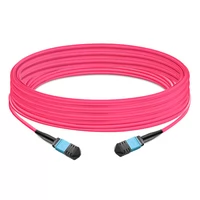
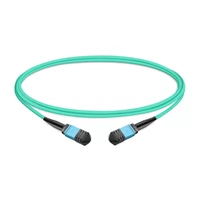
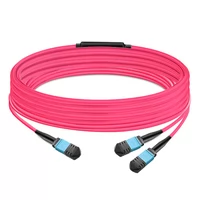
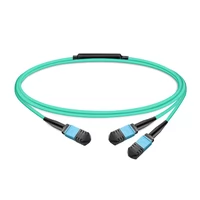
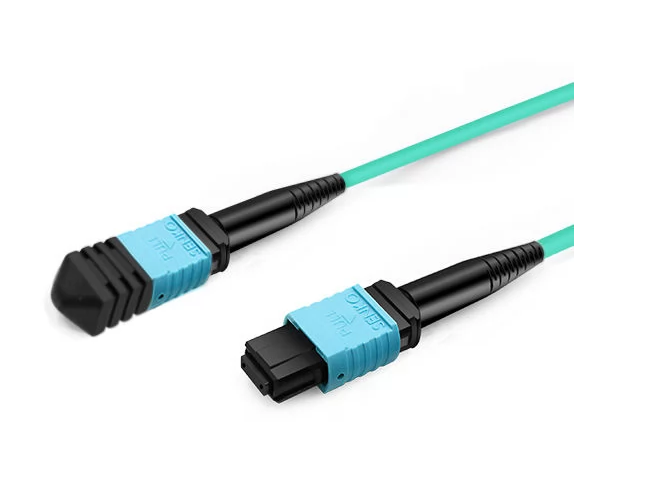
The MPO (Multi-Fiber Push-On) connector is a type of fiber optic connector designed to aggregate multiple optical fibers into one interface, saving space for fiber management and improving efficiency in high-density environments. An MPO connector consists of four main parts: the ferrule, housing, guide pins, and boot. The ferrule is usually made from highly precise ceramic or metal materials and keeps many fibers firmly fixed in position. Mechanical protection is supplied by the housing, while accurate alignment during mating with another MPO connector is ensured by the guide pins. The boot prevents cable integrity loss and excessive bending at the termination point. Together, these components enable fast data transmission rates over long distances, making this device critical for setting up contemporary fiber networks characterized by large capacities and high-speed capabilities.
How an MPO Connector Integrates with Fiber Optic Systems
The MPO connector is a vital multi-fiber connection interface in fiber optic systems. It allows for the fast and easy deployment of high-speed networks by supporting different configurations, including single-mode as well as multimode fibers, which can be patched to various devices such as cassettes, patch panels, or transceivers. To guarantee the best possible signal integrity, it must align precisely with other network hardware while minimizing insertion loss and maximizing return loss. They are most commonly used in data centers and telecommunications infrastructure, where both performance and space savings matter most. They make it possible to manage cable density at higher levels, thus reducing installation times considerably.
Comparing MPO Connectors to Other Fiber Optic Connectors
In high-density settings, MPO connectors offer significant advantages over LC, SC, and ST fiber optic connectors. Typically used for single-fiber applications, LC, SC, and ST connectors require multiple terminations, whereas multi-fiber connections like MPO connectors are designed to handle many fibers at once. This makes them highly suitable for data centers with high-density installations. Additionally, consolidating multiple fibers into a single design enables faster installation, thereby reducing labor charges and setup times. Furthermore, MPO connectors offer superior performance since they can handle high speeds while aligning fibers accurately, minimizing insertion loss compared to traditional options. Achieving comparable performance levels with conventional systems would require more cables and involve higher maintenance efforts. Finally, the modularity of MPO connectors allows for scalability in network expansion, meaning these devices can be upgraded easily to cater to future bandwidth needs.
How to Choose the Right MPO Connector for Your Needs?
Single Mode vs. Multimode MPO Connectors
It is important to know that each type has unique application needs and performance features when selecting between single-mode and multimode MPO connectors. Single-mode MPO connectors are designed for data transmission over long distances and are commonly used in telecommunications and fast network settings. They have a core diameter of about 9 microns, which enables them to support wider bandwidths and transmit data over longer ranges without considerable signal loss.
In contrast, multimode MPO connectors possess larger core diameters, usually 50 or 62.5 microns, making them appropriate for short-range connections within enterprise networks and data centers. Moreover, multimode setups are more cost-effective because their associated transceivers and cables are generally more affordable than those used in single-mode systems. Multimode connectors are excellent for high-speed data transfers within the same building or campus, supporting rates up to 400 Gb/s.
To sum up, choosing whether to use a single-mode or a multimode MPO connector depends on the distance to be covered, the project budget, and bandwidth requirements. If there is a need for higher capacity over longer distances, single-mode is suitable. Conversely, if the requirement is for high speeds over short ranges, multimode should be adopted to save costs.

Understanding Polarity in MPO Connectors
In MPO connectors, polarity refers to the way fibers are aligned to ensure that light is transmitted from a transmitter to a receiver along the correct path. There are three common polarity methods used in MPO connectors: Method A, Method B, and Method C.
- Method A (Straight-through): This method aligns corresponding fibers 1:1 (i.e., fiber 1 (TX) on one end matches with fiber 1 (RX) on the other end). It requires Type A MPO cables and Type A adapters.
- Method B (Cross-over): This involves crossing over or flipping all fibers so that fiber 1 at one end connects to fiber 12 at the other end, fiber 2 connects with fiber 11, and so on. This method uses Type B MPO cables and connections, which makes implementing parallel optics easier than any other method.
- Method C (Paired Flipped): In this technique, adjacent fiber pairs are flipped so that fiber 1 on one end connects to fiber 2 on the opposite end, fiber 2 connects to fiber 1, and so forth. This method is ideal for duplexed applications. It is commonly used in bi-directional transmission channels, such as back-to-back connections between two switches, where each switch has its own transmit and receive ports.
Knowing how polarity works and which method best suits your network design is important for maintenance. Getting it wrong may cause problems such as heavy signal loss, making some parts of the system unreachable, or even causing complete system failure, leading to severe connectivity issues within an optical communication network.
Factors to Consider: Low-Loss, 12 Fiber, and More
To select the best MPO connectors, there are several important factors to consider that will help achieve better performance and efficiency.
Low-Loss Connectors: These are designed to minimize insertion losses, which occur when some signal power is lost after a device is inserted into the transmission line. This is vital in high-density environments for higher-speed networking, where signal integrity must always be maintained. Low-loss connectors usually achieve this through advanced alignment and polishing methods.
12-Fiber Connectors: The 12-fiber MPO connector is one of the most common configurations used regularly within data centers or other locations with high-speed networks. This type supports effective data transmission and simplifies cable management systems, making work easier for network administrators. When installing these connectors, ensure they adhere to standards such as TIA-568 or IEC 61754-7.
Other Considerations: Key aspects include connector robustness, ease of installation, and compatibility with existing infrastructure. Additionally, it is crucial to look into the scalability needs of your network. Future-proofing saves on expensive upgrades later, while instrument-grade connectivity and proper testing can greatly improve the overall reliability of the network.
Knowing these factors will enable you to make wise choices that guarantee strong and efficient network performance.

What Applications Benefit from MPO Connectivity?
Data Centers and High-Density Settings
MPO connectivity is highly advantageous in data centers and high-density environments because of its ability to support fast data transmission and simplify cable management. As the need for bandwidth increases with the demand for quicker processing speeds, MPO connectors become more suitable for settings that require quick installation and minimal space occupation. They simplify network design by reducing cable congestion, which also enhances the airflow necessary for efficient cooling systems. Moreover, MPO connections allow for scalability, enabling networks to accommodate future growth without extensive re-cabling or major infrastructure alterations. Combined, these factors make MPO links vital components in contemporary data centers and other densely populated networking locations.
Telecommunications and Network Backbones
Telecommunications and network core infrastructures greatly benefit from MPO connectivity, as it allows for the transfer of large volumes of data and improves overall efficiency. These connectors integrate smoothly with existing structures, optimizing older systems while preparing them for next-generation networks. Their small size and modularity make them easy to install and maintain, reducing downtime and saving operational costs. MPO technology is also known for its excellent scalability, meaning service providers can easily expand their connection points without a complete infrastructure overhaul. With this resilient solution, network reliability is sustained, catering to current communication demands and anticipated future technological advancements.
Advancements in High-Speed Data Transmission
Optical fiber technology, Dense Wavelength Division Multiplexing (DWDM), and advanced modulation formats have driven the development of high-speed data transmission. Latency has been reduced, and data can travel faster over longer distances due to optical fibers, which provide greater bandwidth. DWDM technology allows multiple data signals to be carried simultaneously on different wavelengths of light, increasing the capacity and efficiency of existing fiber optic cables. Quadrature Amplitude Modulation (QAM) is another advanced modulation format that increases data transmission rates by encoding more bits per signal. In summary, these technologies form the foundation of modern telecommunications, ensuring networks can cope with increasingly fast demands for information transfer.

What Are the Standards and Certifications for MPO Connectivity?
Key Certifications and Compliance Standards
For maximum performance and interoperability in MPO connectivity, there are several essential certifications and compliance standards. The TIA-568 standards from the Telecommunications Industry Association are among the most important. They provide a basis for structured cabling systems, requiring components from different manufacturers—like MPO connectors—to meet certain specifications, thereby ensuring uniform performance.
Another crucial standard is IEC 61754-7 by the International Electrotechnical Commission, which outlines dimensions and operational requirements for MPO connectors, ensuring global compatibility and reliability.
In addition, ISO/IEC 11801 addresses generic cabling for customer premises to support high-speed data transmission through wide area networks using fiber optic cables terminated with MPO connectors. Together, these standards strive to safeguard the integrity, efficiency, and scalability of telecommunications infrastructures, adhering to universally accepted best practices recognized by industry bodies like TIA, EIA, and IEEE.
Importance of Certification in Network Reliability
To establish an ideal network, certification is important because it ensures that all parts in a complex telecommunication system work together seamlessly. For instance, guidelines from TIA-568, IEC 61754-7, and ISO/IEC 11801 must be followed by manufacturers and service providers to avoid compatibility problems or operational inefficiencies.
Certificates verify that parts, such as MPO connectors, conform to strict industry norms, keeping product quality uniform across the board. Ideal network performance relies on this standardization to avert signal loss, minimize downtime, and improve data transmission integrity. Furthermore, sticking to these benchmarks aids scalability, enabling systems to adjust to changing technology needs while maintaining the high speeds essential for large file transfers. Without these certifications, telecommunication infrastructures would not be robust enough to handle heavy traffic loads reliably.
Common Issues and How to Troubleshoot MPO Connector Problems
Frequent MPO Connector Issues and Solutions
With MPO connectors, a few issues can emerge that affect network reliability and performance. Here are some common problems along with their solutions:
- Contamination and Dirt: Dust or dirt usually contaminates MPO connectors, negatively affecting signal transmission. Solution: Regularly clean and inspect MPO connectors using correct cleaning tools like lint-free wipes or dedicated optical connector cleaners.
- Connector Misalignment: When an MPO connector is misaligned, it can cause signal loss and increase return loss. Solution: Ensure that during installation, connectors are seated properly to achieve accurate alignment, which can be confirmed by alignment tools and testers calibrated for MPO connectors.
- Fiber End-face Damage: Fiber end-faces are delicate and can easily get scratched or damaged, leading to poor performance. Solution: Always cover them with protective caps during installation or maintenance; if damage is found, re-terminate or replace the affected connectors.
By addressing these challenges through proper handling and regular maintenance, you can greatly enhance the performance and reliability of MPO connectors in telecom networks.
Maintenance and Care for Prolonged MPO Cable Lifespan
Expanding the lifespan of MPO cables requires consistent attention and adherence to best practices. Here are essential maintenance steps recommended by the industry:
- Frequent inspections: Regularly examine your MPO connectors and cables for signs of wear, damage, or dirt. Use a high-quality inspection microscope to check the condition of your fiber end-faces.
- Cleaning correctly: Clean MPO connectors before every mating cycle with specialized MPO cleaning tools. To prevent residue, use dry cleaning techniques like lint-free swabs or cassette cleaners. Wet cleaning using isopropyl alcohol should only be done if absolutely necessary.
- Handling properly: Ensure gentle handling of MPO cables to avoid bending, twisting, or pulling, which can destroy internal fibers. Always use proper strain relief components and tools to maintain the correct cable bend radius.
- Control the environment: Store cables in a clean, dry place to prevent exposure to dust, moisture, and extreme temperatures. When not in use, protect connectors with caps to avoid contamination.
- Regular testing: Use optical time-domain reflectometers (OTDR) or loss testers for frequent performance tests to identify any signal quality degradation. Any detected abnormalities must be addressed immediately.
If network experts follow these guidelines, they will maximize reliability and efficiency, achieving the highest possible performance from their MPO connections.
Reference sources
- Fiber Optic Association – MPO Connectors in Fiber Optic Networks
- Source: Fiber Optic Association
- Summary: The Fiber Optic Association explains what MPO connectors are and how they work. They are considered to be the backbone of fiber optic networks because they allow for faster data transmission rates than other types of connectors. This source also provides information about their technical specifications, applications in network infrastructure, benefits for high-speed data transmission and more, which makes it a valuable resource for professionals who need or want to know more about MPO technology.
- Optical Connections Magazine – Exploring the Role of MPO Connectors
- Source: Optical Connections Magazine
- Summary: According to Optical Connections Magazine, “MPO connectors have become ubiquitous with fiber optic networks worldwide.” The article goes on to discuss many different aspects of this type of connector, including its evolution over time, best practices for deploying them within networks, and their impact on overall performance levels once implemented correctly. This is another great resource if you’re looking for something practical based on network connectivity optimization using MPO solutions.
- Corning – MPO Technology Guide for Fiber Optic Networks
- Source: Corning – MPO Technology Guide
- Summary: Corning provides an extensive guide on MPO technology for fiber optic networks. This source looks at different design principles of MPO connectors, their compatibility with various network architectures, and tips for ensuring reliable connections. Network engineers and technicians can find useful tips from this source when working with MPO technology effectively.
Frequently Asked Questions (FAQs)
Q: What is an MPO connector?
A: An MPO connector, also known as a Multi-Fiber Push-On connector, is a fiber optic connector that houses multiple fibers in a single ferrule. This enables high-density connections and is commonly used in data centers and other applications where large numbers of optical fibers need to be connected.
Q: How do MPO fiber connectors work?
A: MPO fiber connectors work by precisely aligning multiple fibers within a single ferrule. This alignment ensures the efficient transmission of data between each individual fiber optic cable inside the connector, keeping communication fast and reliable.
Q: What are the benefits of using MPO connectors?
A: Advantages include reduced installation time due to the ability to connect multiple fibers simultaneously. They also provide scalability, as networks can easily grow or shrink depending on demand. This makes them ideal for environments with complex connectivity needs, such as data centers where physical space is limited but bandwidth requirements are high.
Q: What are some common applications of MPO connectors?
A: Data centers, enterprise networks, and telecommunications systems often use MPO connectors for high-speed, space-saving links. They are found in trunk cables, patch cords, and other connections where multiple fibers must be linked at once.
Q: How does the MPO certification process work?
A: The MPO certification process verifies that a connector meets the performance criteria necessary for high-speed data transmission. Common tests include insertion loss testing, return loss measurement, and fiber position evaluation.
Q: What are the typical configurations for MPO trunk cables?
A: MPO trunk cables usually have 12 or 24 fibers and are often used to connect high-density patch panels. For example, a 24-fiber trunk cable typically features a compact outer jacket diameter ranging from 4.5mm to 4.9mm, therefore making it easier for technicians to organize cabling solutions within limited spaces, such as high-density cabinets.
Q: What should be considered when selecting an MPO fiber connector?
A: When selecting an MPO fiber connector, consider the number of fibers (typically 12 to 144), the required optic cable type (single-mode or multimode), male/female gender specifications, and additional features like pull-tab designs that affect compatibility with your specific application needs.
Q: What is meant by ‘Guide Pins’ in MPO connectors?
A: Guide pins are alignment pins used with male MPO connectors to ensure all fibers within the ferrule align precisely with the corresponding fibers on the mating side. This guarantees optimal performance and reliability across the link.
Q: How does MPO connector density impact data centers?
A: Higher density allows more connections to be made within the limited physical space of a data center. This is vital for facilities handling massive amounts of information, as it enables capacity expansion without requiring an excessive physical hardware footprint.
Related Products:
-
 NVIDIA MFP7E10-N035 Compatible 35m (115ft) 8 Fibers Low Insertion Loss Female to Female MPO Trunk Cable Polarity B APC to APC LSZH Multimode OM4 50/125
$118.00
NVIDIA MFP7E10-N035 Compatible 35m (115ft) 8 Fibers Low Insertion Loss Female to Female MPO Trunk Cable Polarity B APC to APC LSZH Multimode OM4 50/125
$118.00
-
NVIDIA MFP7E10-N003 Compatible 3m (10ft) 8 Fibers Low Insertion Loss Female to Female MPO Trunk Cable Polarity B APC to APC LSZH Multimode OM3 50/125
$35.00
-
NVIDIA MFP7E20-N050 Compatible 50m (164ft) 8 Fibers Low Insertion Loss Female to Female MPO12 to 2xMPO12 Polarity B APC to APC LSZH Multimode OM4 50/125
$145.00
-
NVIDIA MFP7E20-N003 Compatible 3m (10ft) 8 Fibers Low Insertion Loss Female to Female MPO12 to 2xMPO12 Polarity B APC to APC LSZH Multimode OM3 50/125
$52.00
-
NVIDIA MFP7E30-N003 Compatible 3m (10ft) 8 Fibers Low Insertion Loss Female to Female MPO Trunk Cable Polarity B APC to APC LSZH Single-Mode OS2 9/125
$42.00
-
1m (3ft) 12 Fibers Female to Female MPO Trunk Cable Polarity B LSZH OM3 50/125 Multimode Fiber
$20.00
-
1m (3ft) 12 Fibers Female to Female MPO Trunk Cable Polarity B LSZH Multimode OM4 50/125
$21.00
-
1m (3ft) 12 Fibers Female to Female MPO Trunk Cable Polarity B LSZH OS2 9/125 Single Mode
$26.00
-
1m (3ft) MPO UPC Female to 4 LC UPC Duplex OM3 50/125 Multimode Fiber Breakout Cable, 8 Fibers, Type B, LSZH, Aqua
$20.00
-
1m (3ft) MPO UPC Female to 4 LC UPC Duplex OM4 50/125 Multimode Fiber Breakout Cable, 8 Fibers Type B, LSZH, Aqua/Violet
$23.00