


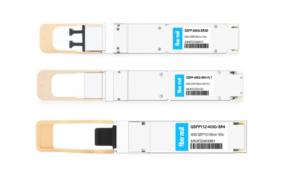
800G SR8 and 400G SR4 Optical Transceiver Modules Compatibility and Interconnection Test Report
Version Change Log Writer V0 Sample Test Cassie Test Purpose Test Objects:800G OSFP SR8/400G OSFP SR4/400G Q112 SR4. By conducting corresponding tests, the test parameters meet the relevant industry standards,

USFP Connector Explained: The 2D Array and Two-Step Insertion
The USFP connector is the electrical interface that connects a USFP optical module to the host system in a switch or SuperNIC. It uses a two-dimensional (2D) array connector with

NVIDIA H200 Burn-In Test and Maintenance: A Complete Delivery Checklist
An H200 burn-in test is essential for validating GPU stability, memory integrity, interconnect performance, and cooling behavior before an NVIDIA H200 server enters production. The NVIDIA H200 Tensor Core GPU

ROADM Architecture: Degrees, CDC, and WSS Explained
A 20-degree ROADM site can consume three equipment cabinets, more than a hundred circuit boards, and around 400 fibers inside the building. The wavelengths move in software. The hardware does

USFP Thermal Design: 100W Power Dissipation Without Embedded Cooling
The USFP thermal design is intended to support up to 100W of power dissipation per module without a dedicated embedded cooling circuit. In a host-cooled implementation, heat can be transferred
DWDM Amplifier Guide: EDFA Types, Specs & Selection
Dmitri ordered six amplifiers for a metro build. All were C-band, specified for a 40-channel configuration, and listed as boosters. Two had 17 dB of gain and a listed “saturated

USFP AI Factory Networking: How 400G/Lane Optics Reshape the AI Fabric
USFP (Ultra-Dense Small Form Factor Pluggable) is the new optical transceiver form factor from NVIDIA and Cisco that brings 400 Gb/s-per-lane electrical signaling to AI factory networking. Announced at OCP Global